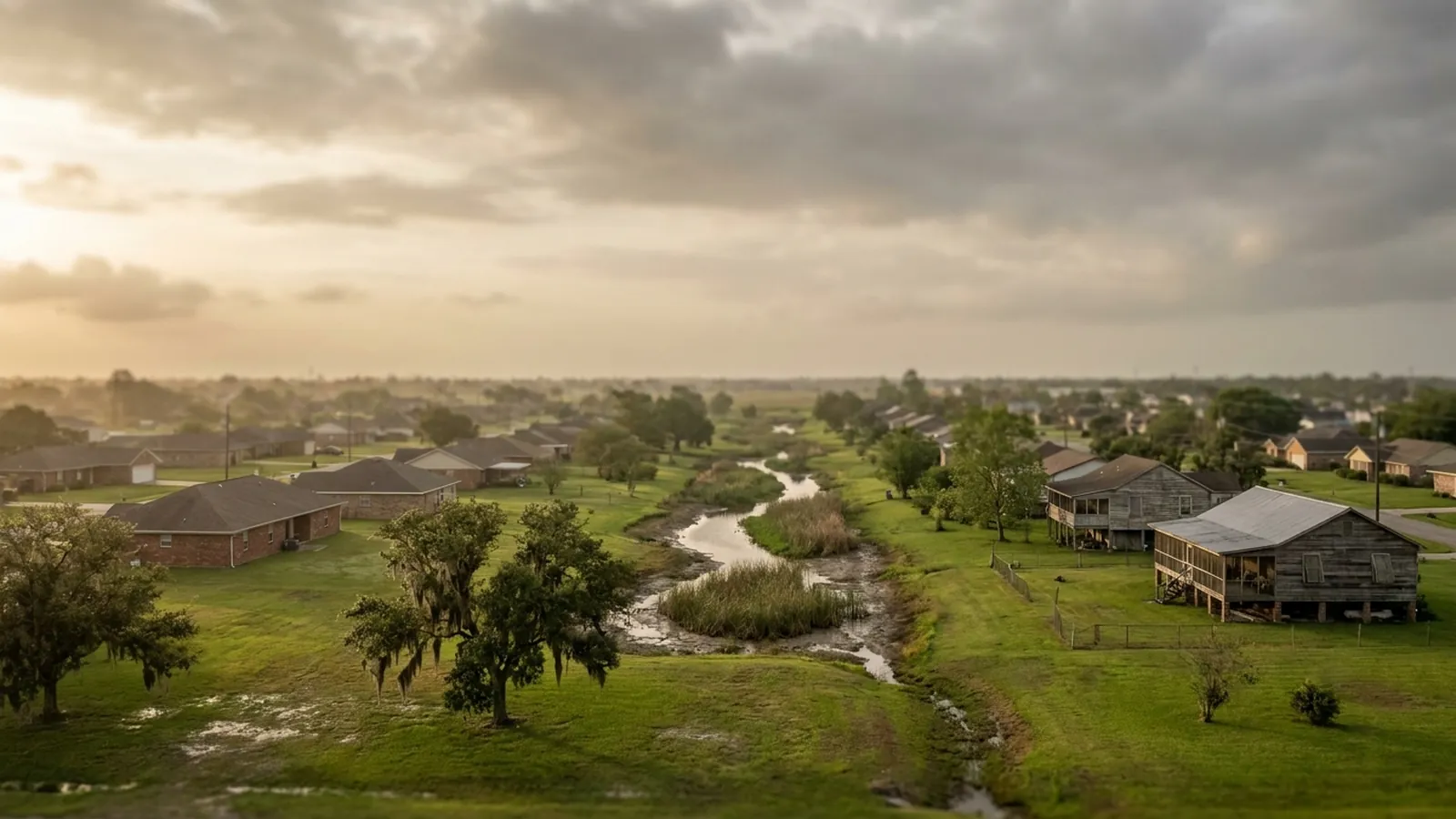
Concrete pier underpinning in Lafayette runs $1,200–$3,000 per pier and $4,000–$15,000 complete. It follows drainage rather than replacing it, because piers carry the beam and do nothing about the water. Ask whether the site visit is charged.
When piers are genuinely needed, why the depth figure decides the price, and what the log should record.
When foundation repair by piering is the right answer
When the ground under part of a slab has already given way and drainage alone will not undo it. That distinction is worth drawing carefully, because on this soil the two situations look identical from inside the house.
Softened bearing soil recovers some capacity once the water is taken out of it. A slab that has settled two inches into that softened ground does not float back up when it drains. So the honest test is not whether the soil is wet — it is whether the structure has already moved measurably, which is what the floor level survey establishes.
Why they come after drainage, not instead of it
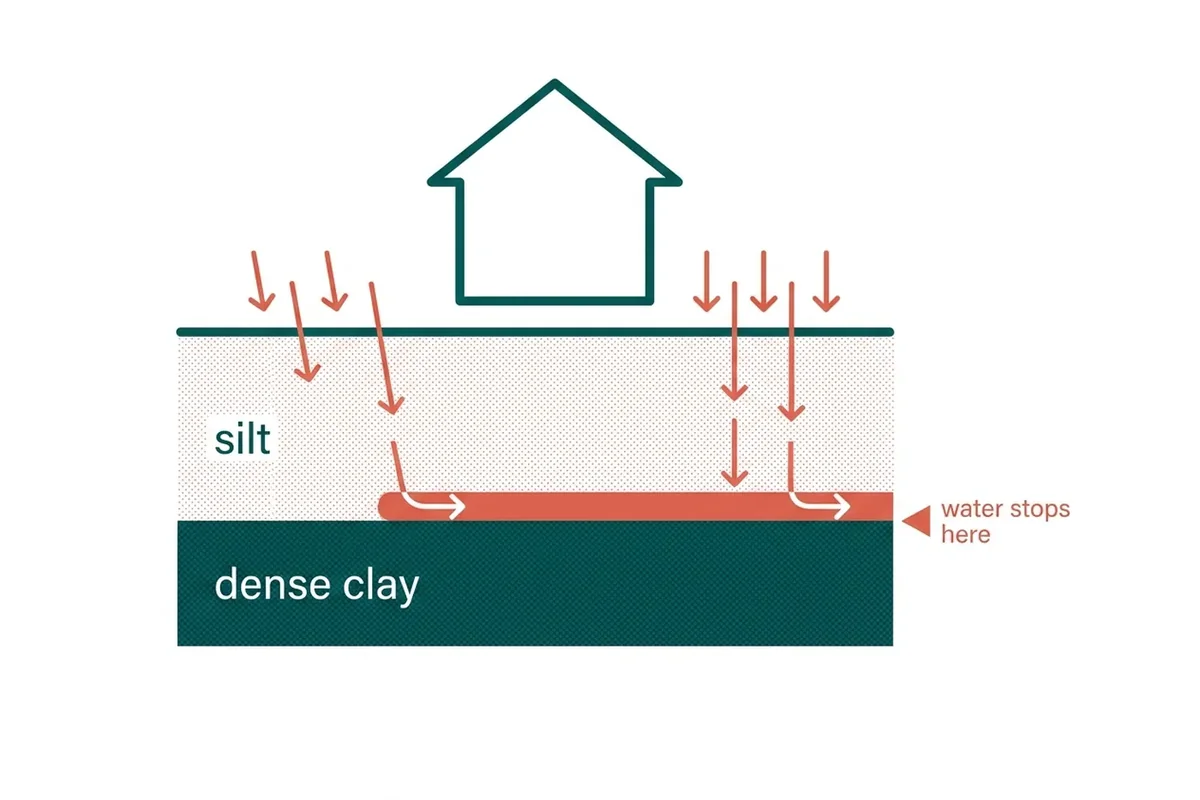
A pier carries load at the point where it is installed. It does not change the moisture content of the ground between piers, under the interior of the slab, or around the perimeter.
So a house underpinned while water is still perching underneath has a supported beam line sitting on ground that carries on softening everywhere the piers are not. The interior slab keeps working, the plumbing beneath it keeps sitting in wet soil, and the perimeter keeps doing what it did before.
This is the one piece of sequencing advice this whole site exists to give, and it is the opposite of what a company trained on shrink-swell ground will tell you. On expansive clay the soil is the problem and support is the answer. Here the water is the problem and support is the finish.
The number that decides your price
Depth. Pier counts on the same house rarely differ much between honest bidders; assumed depths differ constantly, and that assumption is usually printed nowhere.
Put two questions to each bidder: how far down are you assuming, and what is another section worth? Totals without those figures behind them cannot be set against each other, no matter how confidently they are printed.
What you should receive afterwards
- Depth reached at each pier individually, not averaged
- A plan showing where every pier sits, so somebody can find them in twenty years
- Lift achieved against the target that was agreed beforehand
- The rate charged for anything past the assumed depth
- Floor levels taken before and after, which is the only impartial record of what changed
Ask for that record before you sign. Without it any warranty is hard to enforce, and asking any contractor for it up front is entirely reasonable.
It also matters more here than in a shrink-swell market. A foundation repair record that shows depths and positions lets a future owner, or a future contractor, understand what was done and why — and on ground where drainage is half the job, that context is the difference between a sensible follow-up and starting the diagnosis over.
Piers, answered plainly
What do concrete piers cost in Lafayette?
Commonly $1,200-$3,000 each and $4,000-$15,000 for a complete job. The count follows a floor level survey rather than the size of the house, and the depth each pier reaches is what makes two otherwise similar quotes differ.
When are piers the right answer here?
When the bearing soil has already given way under part of a slab and drainage alone will not bring it back. Softened ground can recover some capacity once drained, but a slab that has settled measurably does not lift itself when the water leaves.
Why insist on drainage first?
Because piers carry the beam and do nothing about the soil between and around them. Install support while water is still perching under the house and the interior slab, the plumbing beneath it and the ground at the perimeter all carry on doing what they were doing.
How deep do they go?
Down until resistance is consistent, and that varies from one corner of a lot to another. Any quote you can actually compare will name the depth it assumed and what an extra section costs. Absent those, two bids naming identical pier counts are still describing different jobs.
Will the house come back to level?
Partly, usually. How much recovery is safe depends on how long the structure has held its current position and what the finishes are. Ask the specialist to agree a lift target as a number before anything is jacked, rather than a promise to make it level.
Is this the same as the pressed pilings used in Texas?
Similar family of method - precast sections driven using the structure's weight. What differs here is the ground they pass through and the reason the house moved, which is why the sequencing advice on this site is not the advice you would get in a shrink-swell market.
Concrete, steel, or a releveling?
Underpinning in Acadiana starts with which house you have: a post-war slab on the prairie's silt loam, or a raised pier-and-beam home whose 'settlement' is often the piers, not the planet.
| Option | What it does | The Acadiana specifics |
|---|---|---|
| Cast concrete piers | Columns poured in place beneath the footing | Suit slab homes where the dense horizon sits within practical reach |
| Pressed pilings | Precast sections pushed to resistance and stacked | The regional workhorse — pressed to resistance below the saturated zone |
| Steel piers | Driven deeper where firm ground is a long way down | For sites where long saturation leaves nothing firm at concrete depths |
| Releveling only | Shims and adjustment on a pier-and-beam frame | The frequent honest answer on raised homes — adjust the frame, not the earth |
One Acadiana-specific check before any crawl-space work: Formosan termites are in the parish, they love damp wood, and a releveling crew is often the first to see the evidence. Look while the access is open.
Book a Lafayette site visit
The single most useful thing you can tell us is what your yard does after heavy rain — whether water stands, for how long, and in which corner. On this ground that observation narrows the diagnosis further than any description of a crack. Say whether the house is raised or on a slab too. A local specialist serving Lafayette calls you back.