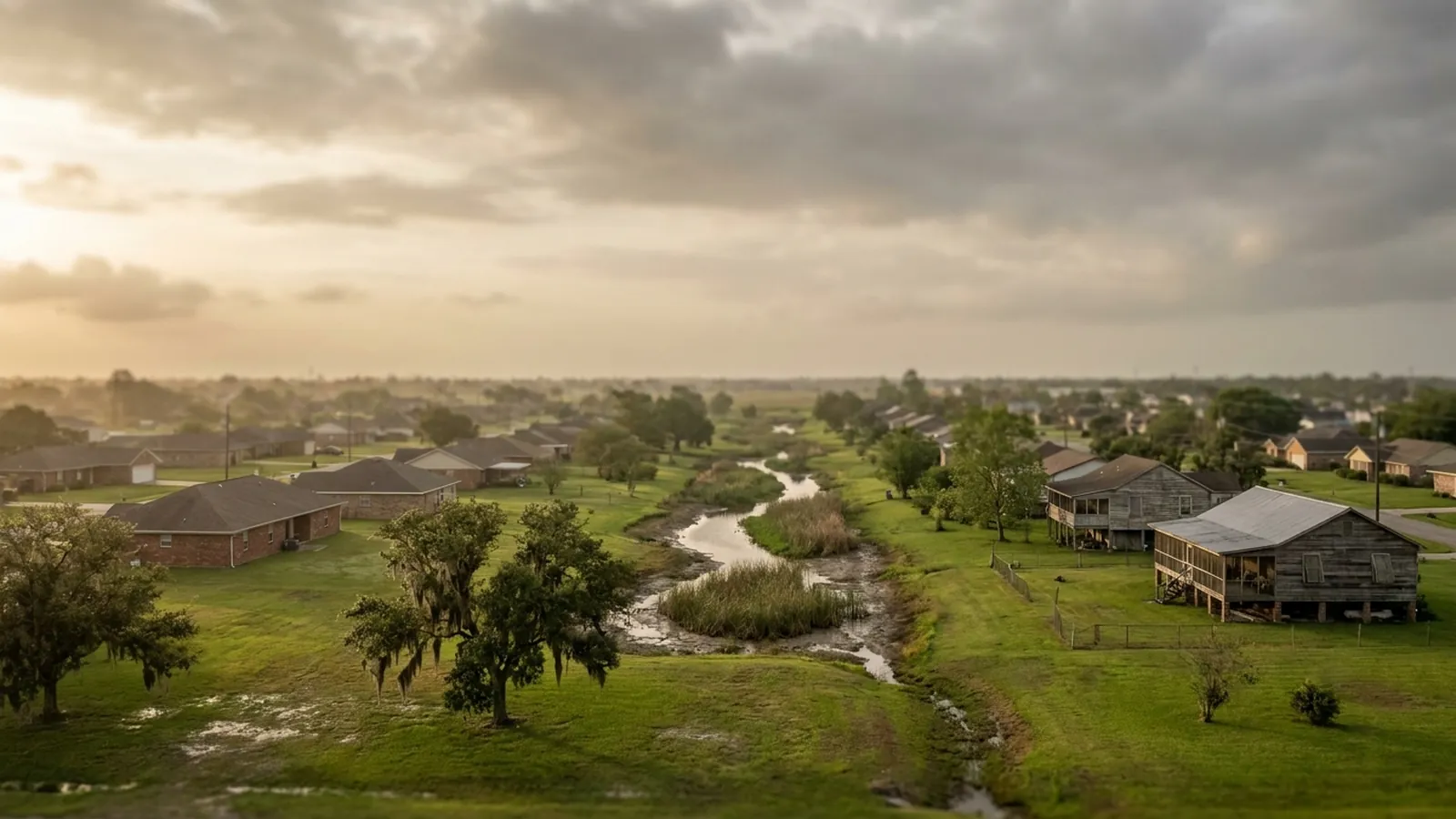
Ring (337) 520-8147 whenever suits — the line takes calls any time — or use the form and a local specialist will call you back. The site visit is available in all five parishes; many local specialists don't charge for it, so ask when they call. Ask for floor levels and an augered hole, and whether any mileage is added.
What your yard is telling you
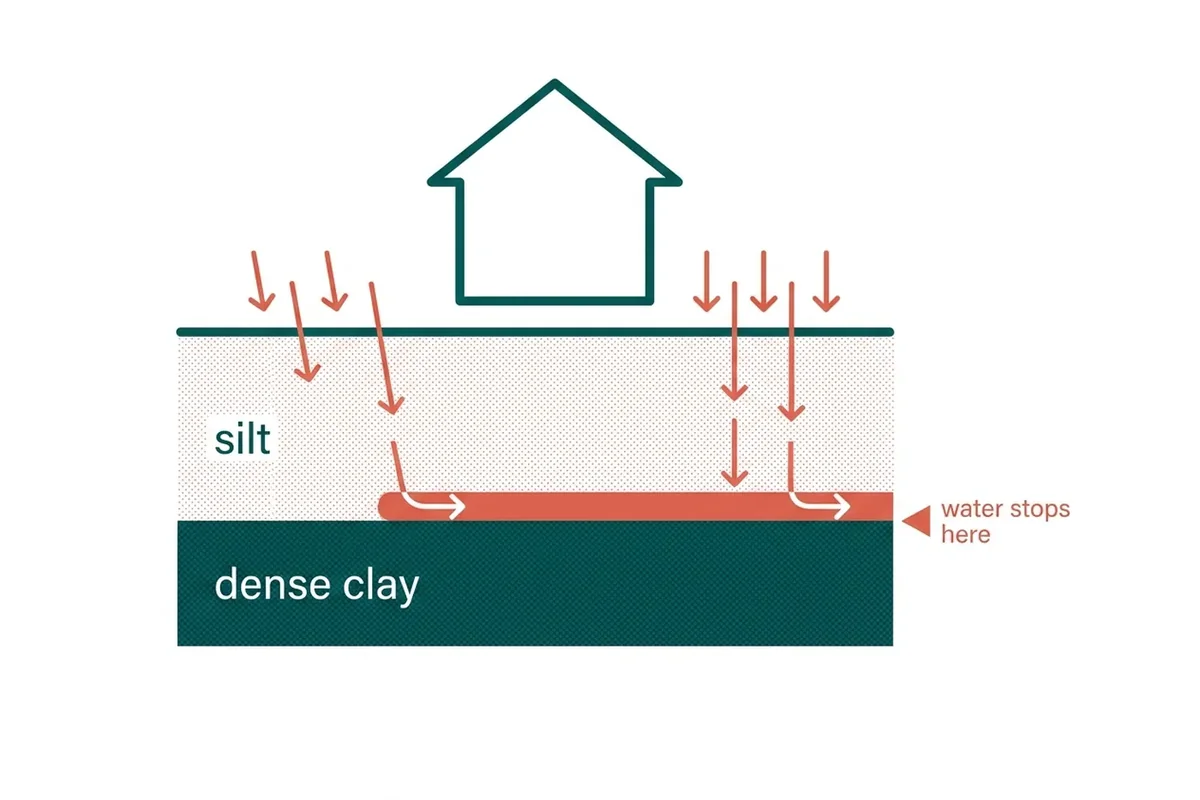
Most foundation companies open by asking what you can see on the walls. On this ground the more useful question is outside, because the mechanism is water that cannot leave and the yard shows it before the house does.
| What happens after heavy rain | What it suggests |
|---|---|
| Water stands for days in the same spot | Classic perched water. The layer below is doing its job as a floor |
| Water stands only since recently | Something upstream changed — new roofing, paving or a regrade nearby |
| Water runs off quickly and never stands | Possibly alluvial ground or genuine relief. The auger will tell |
| The ground is soft underfoot long after | Saturation in the bearing layer, which is the part that matters |
| Only one side of the house | Uneven wetting, which is what actually damages a structure |
That last row is the important one. A house copes with being uniformly wet far better than with one elevation staying wet while the others drain.
Two more things worth knowing
- Raised or slab. Look at the back of the house where the wall meets the ground. It changes what the specialist brings and which repairs apply
- Roughly when it was built. Pre-war Acadiana stock is usually raised; post-war is usually slab, and the newest is almost always slab
Reaching us
By telephone: (337) 520-8147, any time.
By form: below, followed by a call back from a local specialist.
Coverage: five parishes, town by town on the
service areas page.
You will not find an address on this site, because there is nothing at one. We pass your request to one independent local specialist, who comes to the property. Listing an office to seem more solid would be precisely the kind of unbacked assertion the rest of these pages ask you to be sceptical of.
What happens next
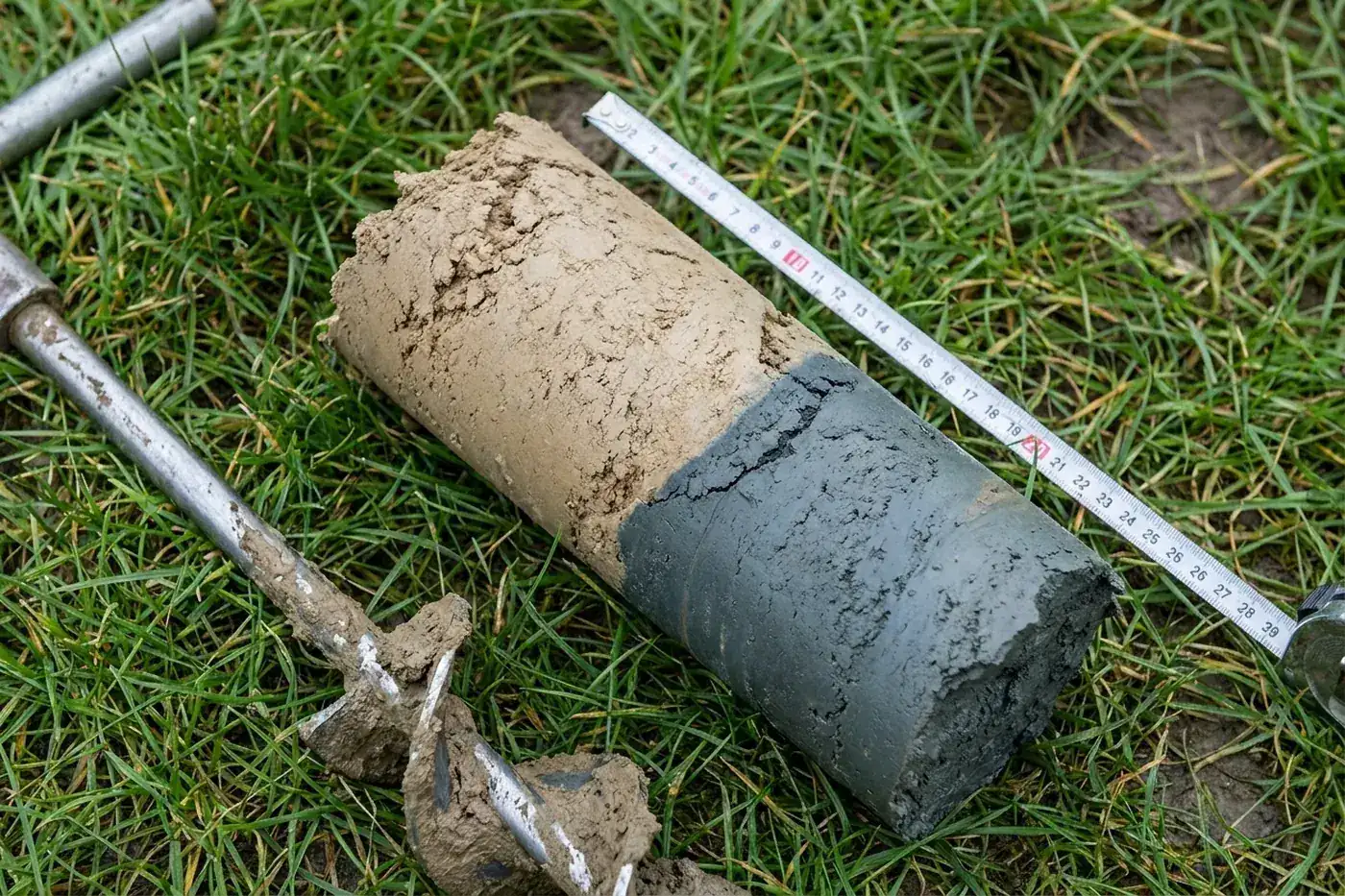
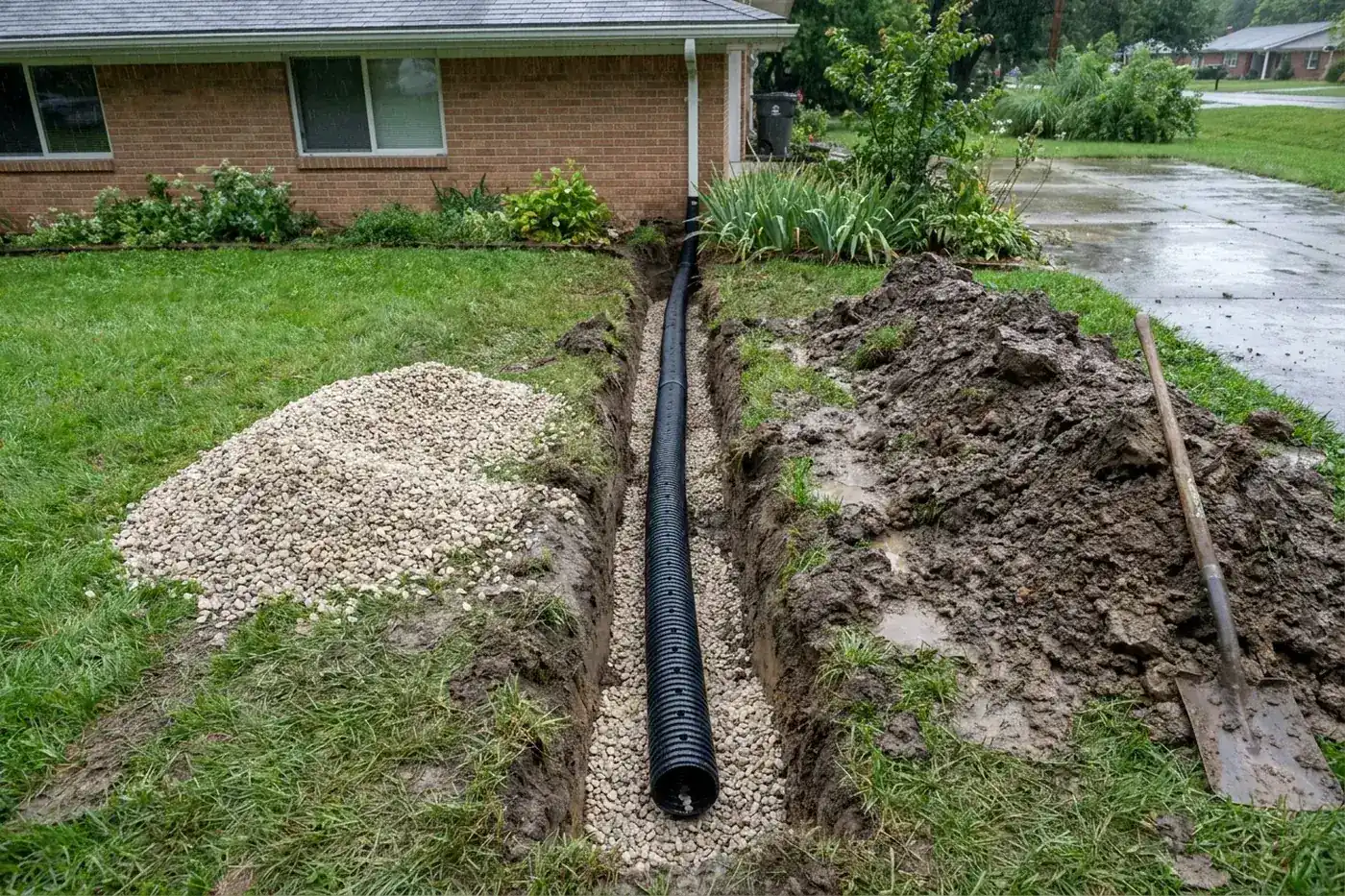
The specialist who calls you back sets an appointment. A good visit measures floor levels across the plan, augers a core to see what your ground is actually made of, and walks the outside looking at standing water and where it could be sent. Ask for a written scope, with no figure discussed ahead of it. If it says drainage and nothing else, that should be because that is what was found.
Before you call
What should I tell you when I call?
What your yard does after heavy rain. Whether water stands, in which corner, and for how many days. On ground where the mechanism is water that cannot leave, that single observation narrows things further than any description of a crack.
I have not paid attention to that.
Then say so, and ask the specialist to look during the visit. If you have a few days before the appointment and rain is forecast, ten seconds of looking out of the window afterwards is worth more than most of what people write down.
Is it urgent?
Rarely. This mechanism works slowly and seasonally, so a few weeks changes very little. Where something is visibly moving week to week, that pace is not perched water and probably points at a leak, so say so when the specialist calls.
Should I say whether the house is raised or on a slab?
Please do. It determines what the specialist brings, what gets measured and which repairs are even applicable. If you are not sure, look at the back of the house where the wall meets the ground - the answer is usually obvious.
Which areas do you cover?
Five parishes: Lafayette, Acadia, St. Landry, St. Martin and Vermilion. Beyond them, send the address over and you will get a straight yes or no instead of a wasted appointment.
Book a Lafayette site visit
The single most useful thing you can tell us is what your yard does after heavy rain — whether water stands, for how long, and in which corner. On this ground that observation narrows the diagnosis further than any description of a crack. Say whether the house is raised or on a slab too. A local specialist serving Lafayette calls you back.