
A good Lafayette site visit takes 45–90 minutes and should produce floor levels, a hand-augered soil core and a written scope. The hole is the point: regional soil maps describe areas, and your house sits on a lot.
What the core shows, what the levels show, and why one without the other is half a diagnosis.
What the hole shows
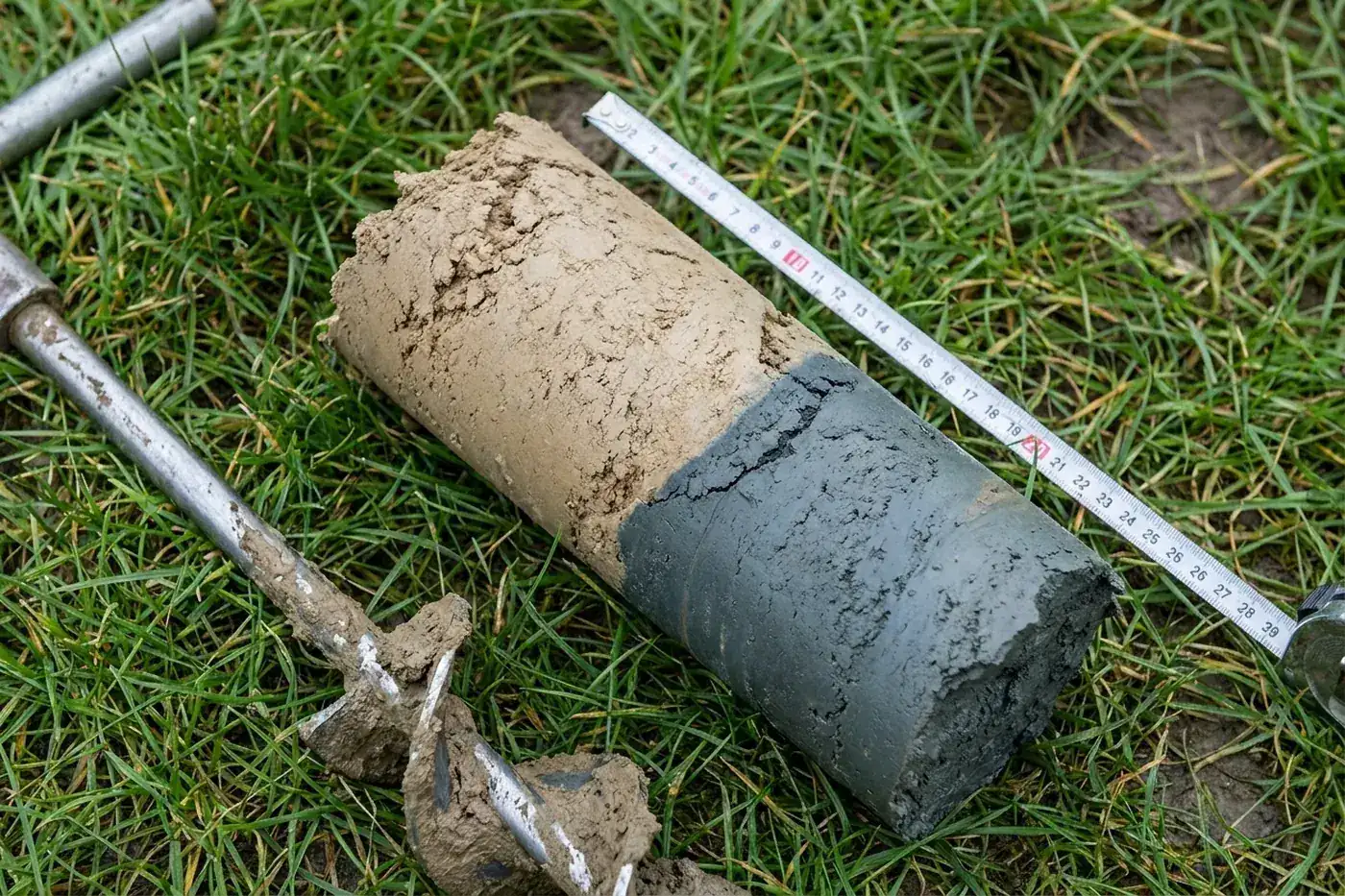
A hand auger brings up a core from the top two or three feet, and on this ground that is where the whole story is. Three outcomes, and they lead in different directions.
| What comes up | What it means | Where it leads |
|---|---|---|
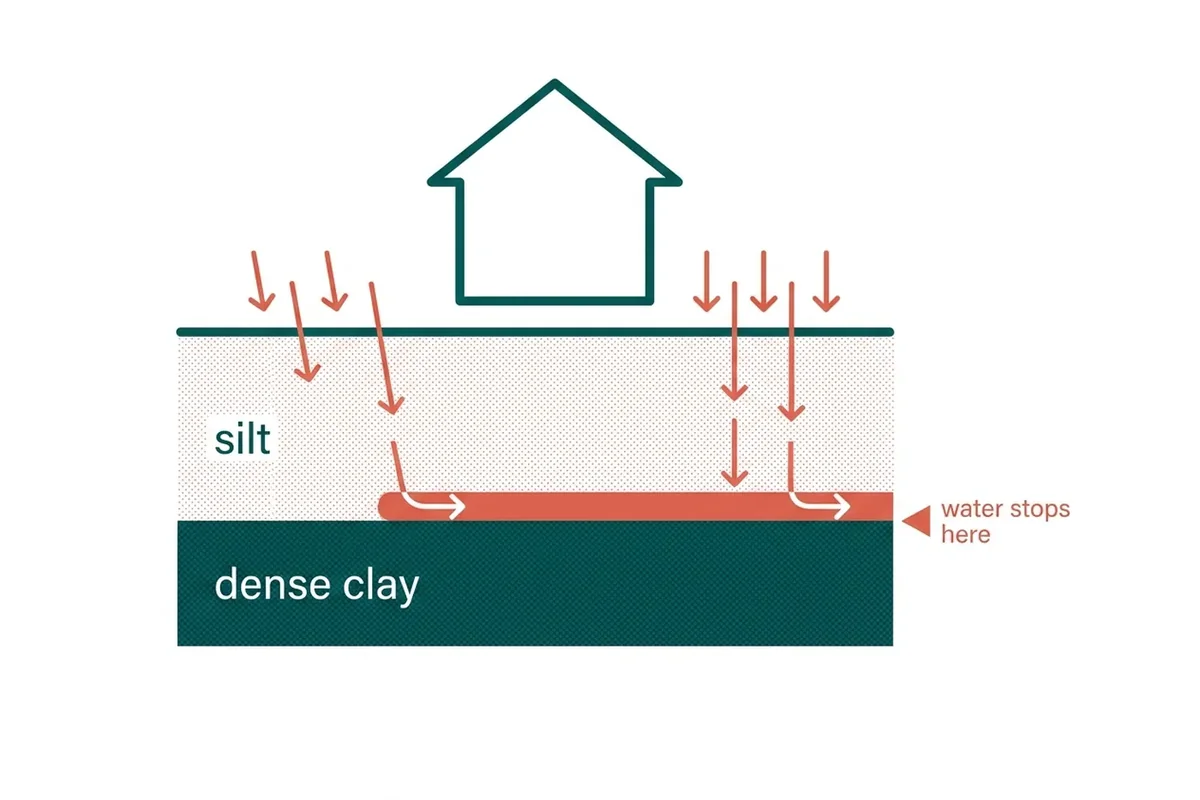
| Pale silt, then dense grey clay at about a foot | Textbook prairie profile | Drainage first, and it may be enough |
| Alternating layers with no clear boundary | Alluvial ground, probably near a bayou | The regional explanation may not apply at all |
| Mixed material, brick fragments, no structure | Made ground — somebody filled this | Depth of the fill becomes the question |
| Wet all the way down rather than perched | A high water table, not perching | Honest limits on what drainage can achieve |
That last row matters. If the ground below the supposed perching layer is also wet, there is no drier zone to drain into, and that is better found with an auger than after a trench goes in.
What the levels show
Relative floor heights across the plan, which is the difference between a house that has moved and a house that was never quite flat. Settlement produces a consistent fall in one direction; ordinary construction tolerance produces scattered variation with no coherent pattern.
That distinction decides whether you are buying one half of the job or both, and it cannot be established any other way.
Why foundation repair here needs both readings
Levels without a core tell you the house has moved and leave you guessing why. A core without levels tells you the ground is wet and leaves you guessing whether it has mattered yet.
Together they answer the only two questions that decide a foundation repair scope: is water perching under this house, and has the structure already responded to it?
Get the first wrong and you buy drainage for a house with no perching problem. Get the second wrong and you buy piers for a house that never moved. Both mistakes are common and both are avoidable in under ninety minutes, which is why nothing should be quoted before the visit rather than during it.
What you should keep
- The floor levels, with the measurement points marked
- A description of what the core showed, layer by layer
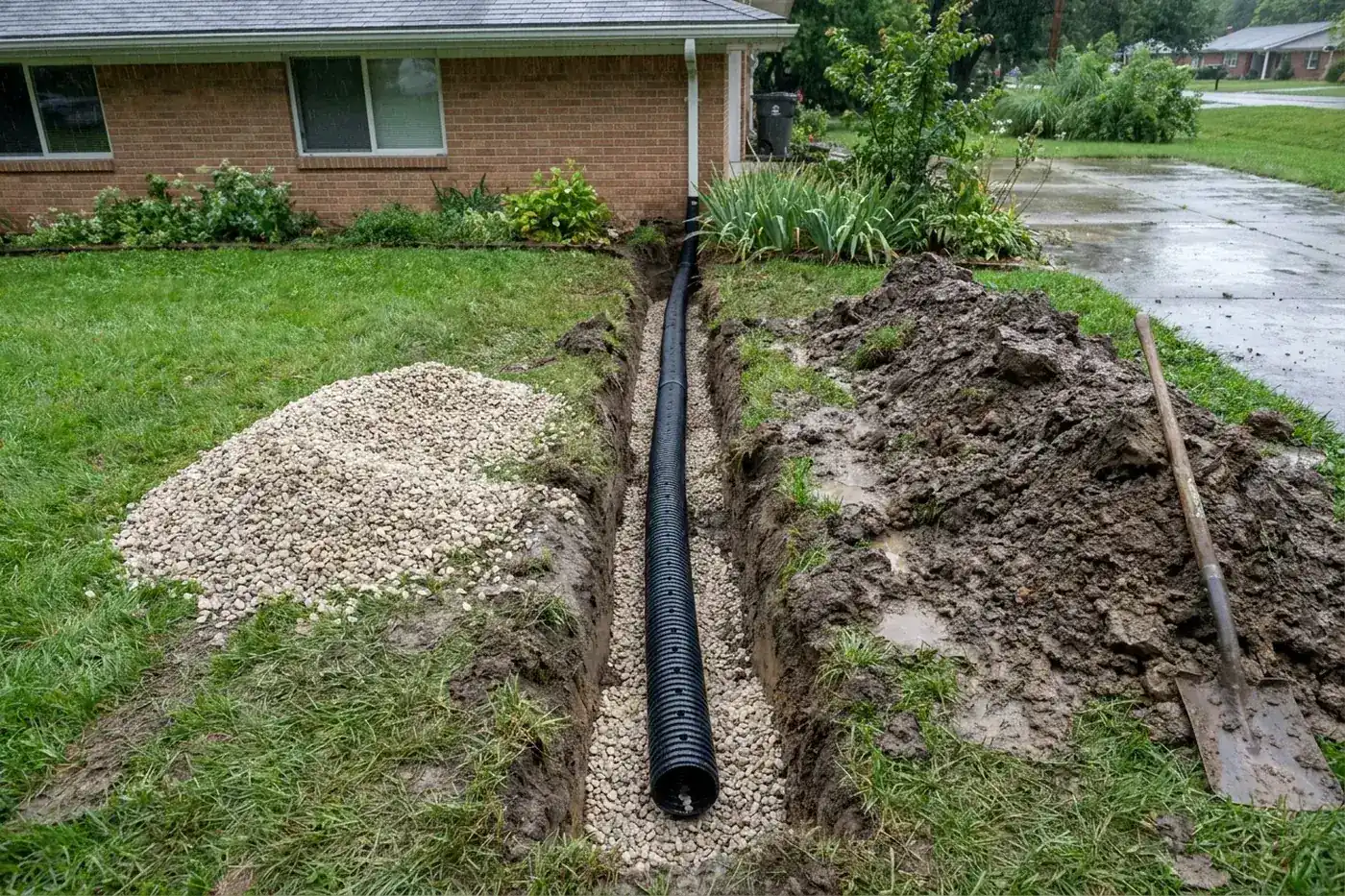
- Where standing water was observed and where it could be discharged to
- Whether the scope is drainage alone or drainage plus structural work
- Where piers are proposed: the depth assumed, and the price per section past it
- Any rival bid you hold, checked first for whether drainage appears in it
Straight answers about the visit
What actually happens during the visit?
A good visit covers floor levels across the whole plan, a hand-augered hole in the yard, and a walk of the outside looking at where water stands and where it could be sent. Ask for a written scope afterwards. Expect 45 to 90 minutes. Ask whether the first visit is charged.
Why dig a hole?
Because the regional soil map describes an area and your house sits on a lot. Ten minutes with a hand auger shows whether you have the textbook prairie profile, something alluvial, or made ground - and that changes the whole diagnosis.
Does it damage the yard?
A hand auger takes out a core a few inches across. It gets backfilled and within a week you will not find it. This is not a drilling rig and it is not a geotechnical investigation - it is a look at the top two or three feet.
Is the first visit free?
Many local specialists don't charge for the first visit, but it depends on the company. Ask when the specialist calls, before they come out. Ask for the levels, the augering and a written scope, and ask the specialist to go through any competing bid with you. On this ground a good number of houses need drainage and no structural work at all.
Can one visit tell me if it is still moving?
Not from one visit, and nobody honest can. A single set of levels describes the shape your house is in today. Whether that shape is changing takes a second set months later, so ask the specialist about a return visit.
What if I already have a quote?
Have it with you. Two things account for most of the gap between competing numbers here - the pier depth nobody printed, and whether drainage appears anywhere on the page. Ask the specialist to point to both in the paperwork during the visit.
Book a Lafayette site visit
The single most useful thing you can tell us is what your yard does after heavy rain — whether water stands, for how long, and in which corner. On this ground that observation narrows the diagnosis further than any description of a crack. Say whether the house is raised or on a slab too. A local specialist serving Lafayette calls you back.