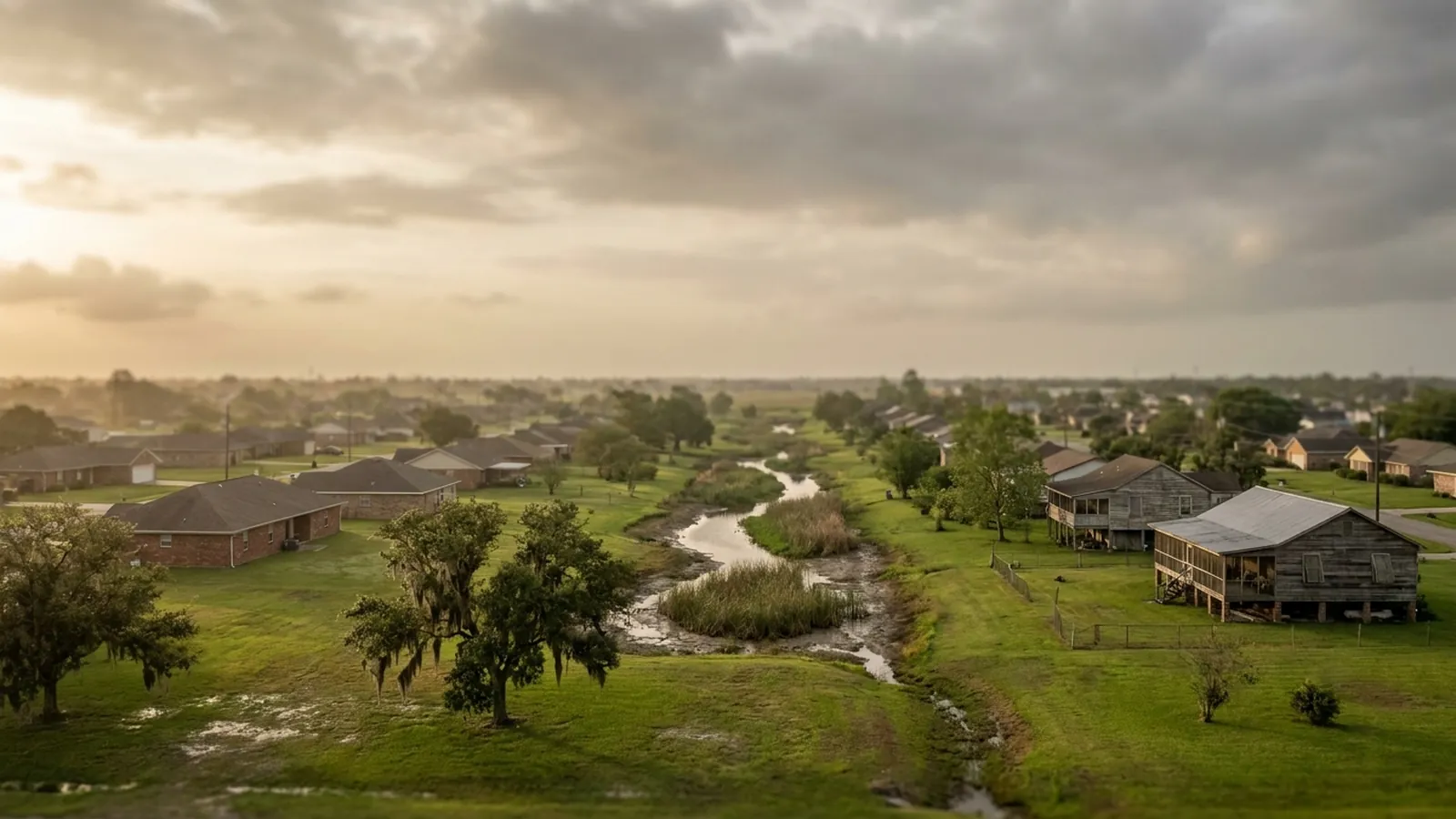
Foundation repair in Lafayette costs $4,000–$15,000 complete, with drainage at $1,500–$6,000. Local soil is silt over a dense floor: permeability drops thirteenfold at 14 inches, so water perches rather than draining. Ask whether the site visit is charged.
The numbers that rule out the usual explanation, what saturated ground actually does, and why drainage comes first here.
What the soil survey says about this ground
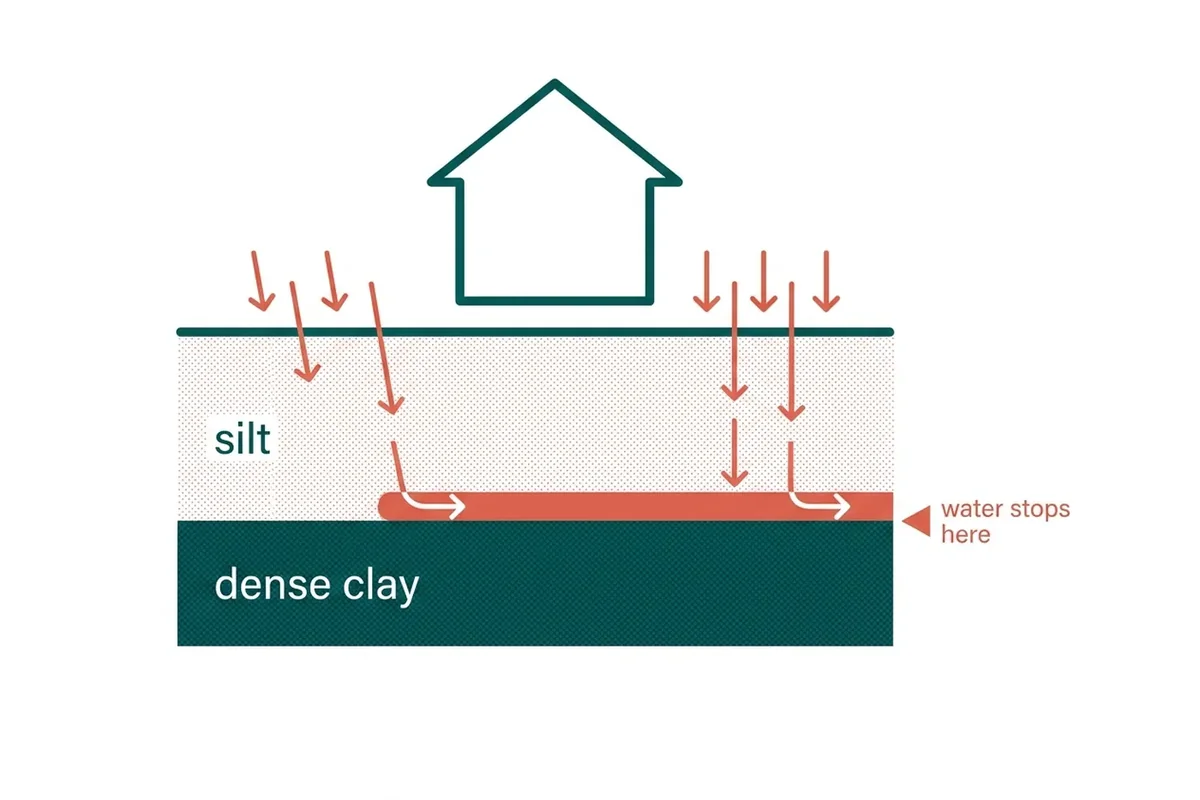
Two soils stacked on each other. The USDA maps Crowley silt loam across most of the Lafayette prairie, and the interesting column is not texture — it is permeability.
| Depth | Clay | Permeability (Ksat) |
|---|---|---|
| 0–7 in | 18.6% | 2.82 — water soaks straight in |
| 7–14 in | 26.2% | 0.40 — slowing sharply |
| 14–33 in | 48.8% | 0.21 — effectively a floor |
Water enters the silty top easily and then stops. Acadiana is too flat for it to escape sideways, so it sits in the layer your foundation bears on until it evaporates or something drains it.
And why this is not the Baton Rouge problem
Fifty-five miles away the ground is completely different, and plenty of local homeowners have been handed the Baton Rouge diagnosis by a company that works both markets.
| Lafayette — Crowley | Baton Rouge — Sharkey | |
|---|---|---|
| Clay at the surface | 18.6% | 84.3% |
| Linear extensibility | 1–4 | 19.8 |
| Permeability | 2.82 falling to 0.21 | 0.21 throughout |
| What goes wrong | Water cannot leave | The clay changes volume |
Linear extensibility measures how much a soil shrinks and swells. At 1 to 4, the dominant Lafayette prairie soil barely does it. A repair designed around carrying a house past an active expansive zone is answering a question this ground is not asking.
What saturation does instead
Soil holding water supports less weight than the same soil drained. When the bearing layer under one part of a foundation stays wet for weeks at a time, it compresses under load while the drier ground a few metres away does not.
The house settles unevenly, and uneven is the whole problem — a structure copes with going down as a unit far better than with one corner going alone. So the cracks, the sticking doors and the sloping floor come from the difference, not from the wetness by itself.
What the work covers
Water That Cannot Leave
A permeable top over a dense floor, and a house sitting on the wet part.
Subsurface Drains
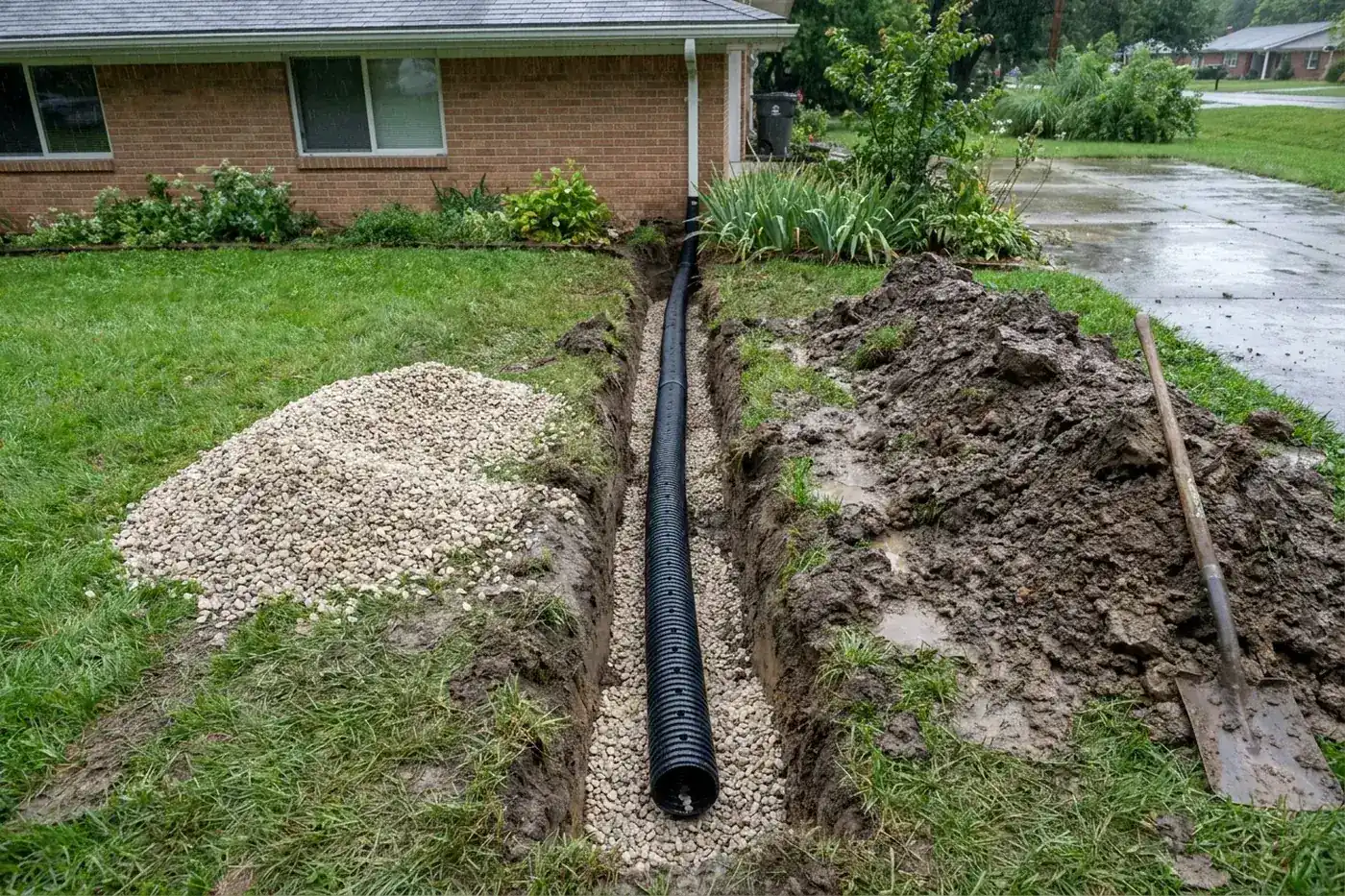
The primary repair on this ground, not a line added to the bottom of a piling quote.
Pier & Beam Releveling
Acadiana's raised stock fails by sloping and bouncing rather than by cracking.
Concrete Piers
For slab houses where saturated ground has genuinely stopped carrying the load.
Sills & Joists
Rot and insect damage in the timber closest to ground that never dries.
Why Water Stands
There is a layer about fourteen inches down that rain cannot get through.
Raised or Slab?
Acadiana has both, they fail in opposite ways, and the repairs share almost nothing.
Termites & Structure
What damp ground invites, what a foundation specialist repairs, and the part that belongs to a pest trade.
What it costs
| Work | Range | Applies when |
|---|---|---|
| First site visit | Often free; ask | Ask for floor levels and an augered hole before any number is discussed |
| Subsurface drainage | $1,500–$6,000 | Water is perching, which here is most of the time |
| Pier-and-beam releveling | $2,500–$9,000 | A raised house has developed slopes or bounce |
| Sill and joist repair | $1,500–$8,000 | Damp has reached the timber under a raised house |
| Concrete piers | $1,200–$3,000 each | A slab has settled and you want the elevation back |
| Complete underpinning | $4,000–$15,000 | Count multiplied by assumed depth |
Both halves are laid out on the Lafayette cost guide.
Where requests are taken
Lafayette, Acadia, St. Landry, St. Martin and Vermilion parishes. Ask the specialist whether travel is priced in.
Crowley · Rayne · Church Point · Broussard · Youngsville · Carencro · St. Martinville · Maurice · Opelousas
Every town is listed on the service areas page.
What a good site visit includes
- Floor levels taken across the whole plan and written down for you to keep
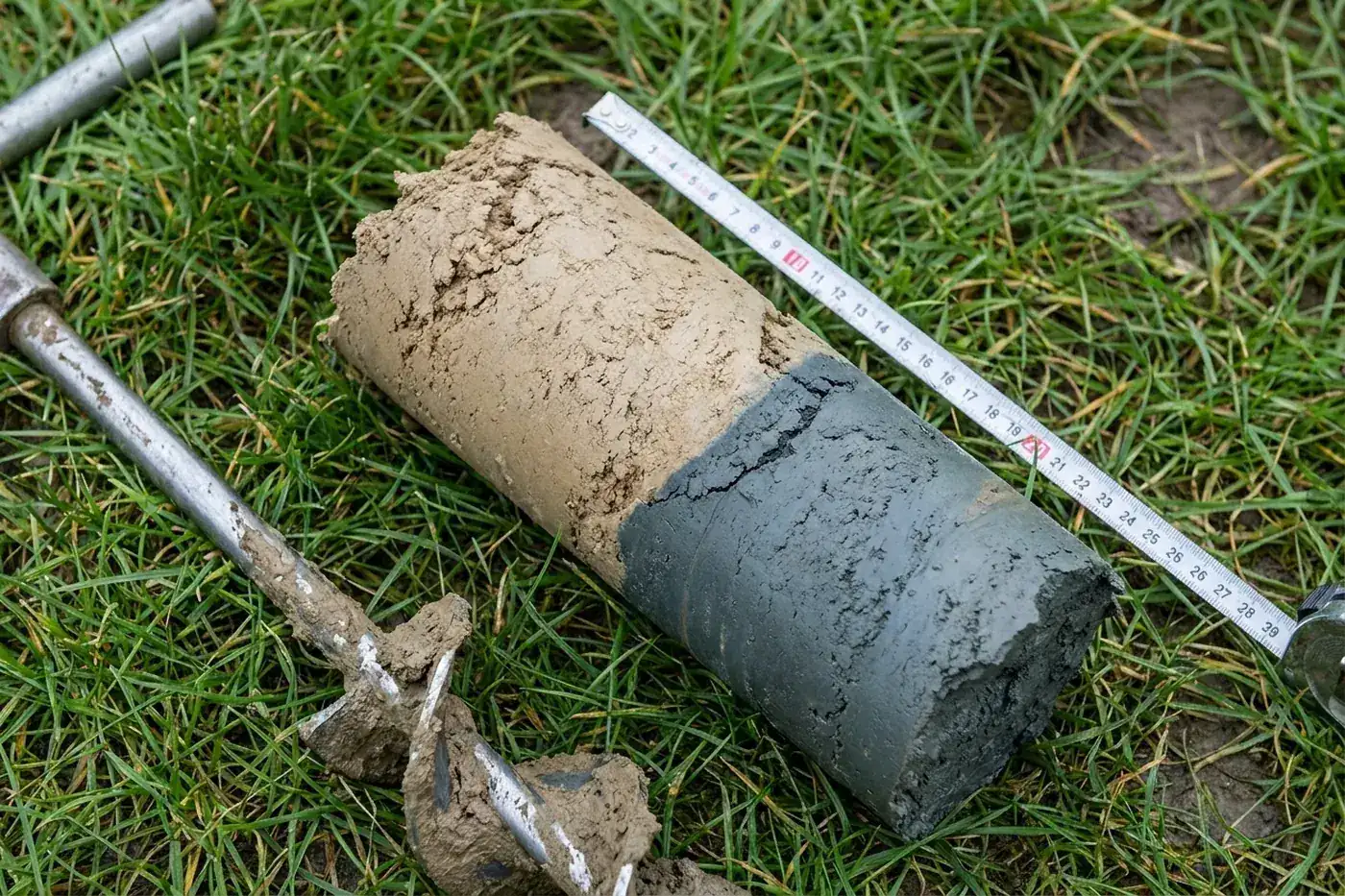
- A hand-augered hole, so the specialist sees your profile rather than the regional map
- An exterior walk: where water stands, where it goes, and where it arrives from
- Whether the house is raised or slab, because the repairs share almost nothing
- Which half of the job you actually need, stated plainly
On this ground a meaningful number of houses need drainage and no structural work at all, which is the cheapest outcome available and the one worth looking for first. See why drainage comes first, what is under your grass, or book the visit.
What people ask
How much does foundation repair cost in Lafayette?
Complete underpinning runs $4,000-$15,000 with concrete piers at $1,200-$3,000 each. Subsurface drainage is $1,500-$6,000, pier-and-beam releveling $2,500-$9,000. Many local specialists don't charge for the first site visit; ask when they call. Ask for floor levels and an augered hole while the specialist is there.
Is this the expansive clay problem?
Almost certainly not. Crowley silt loam, the dominant soil across the Lafayette prairie, has a linear extensibility of 1 to 4. Baton Rouge's Sharkey clay measures 19.8. Our ground barely shrinks and swells - it just cannot drain.
Then why is my house moving?
Water that cannot get away. The USDA records permeability falling from 2.82 at the surface to 0.21 at about fourteen inches, a thirteenfold drop. Rain soaks into the top, hits that layer, and sits there. Saturated soil carries less load than drained soil.
Why does drainage come before piers here?
Because piers carry the beam and do nothing about the water. Support a house while the ground around it stays saturated and the interior slab, the perimeter and the plumbing underneath all carry on as before. Take the water out and the bearing recovers.
My house is raised, not on a slab. Does any of this apply?
All of it, plus more. Raised houses sit over the same wet ground, and the timber closest to it - sills, beams, joist ends - is where damp does its damage. They fail by sloping and bouncing rather than by cracking.
Is there a charge to come out to Crowley or Opelousas?
Ask the specialist whether the first visit is charged and whether their price adds anything for the drive from Lafayette into Acadia, St. Landry, St. Martin or Vermilion parish. Where a bid rises with distance, that journey has been priced into a line somewhere.
Book a Lafayette site visit
The single most useful thing you can tell us is what your yard does after heavy rain — whether water stands, for how long, and in which corner. On this ground that observation narrows the diagnosis further than any description of a crack. Say whether the house is raised or on a slab too. A local specialist serving Lafayette calls you back.