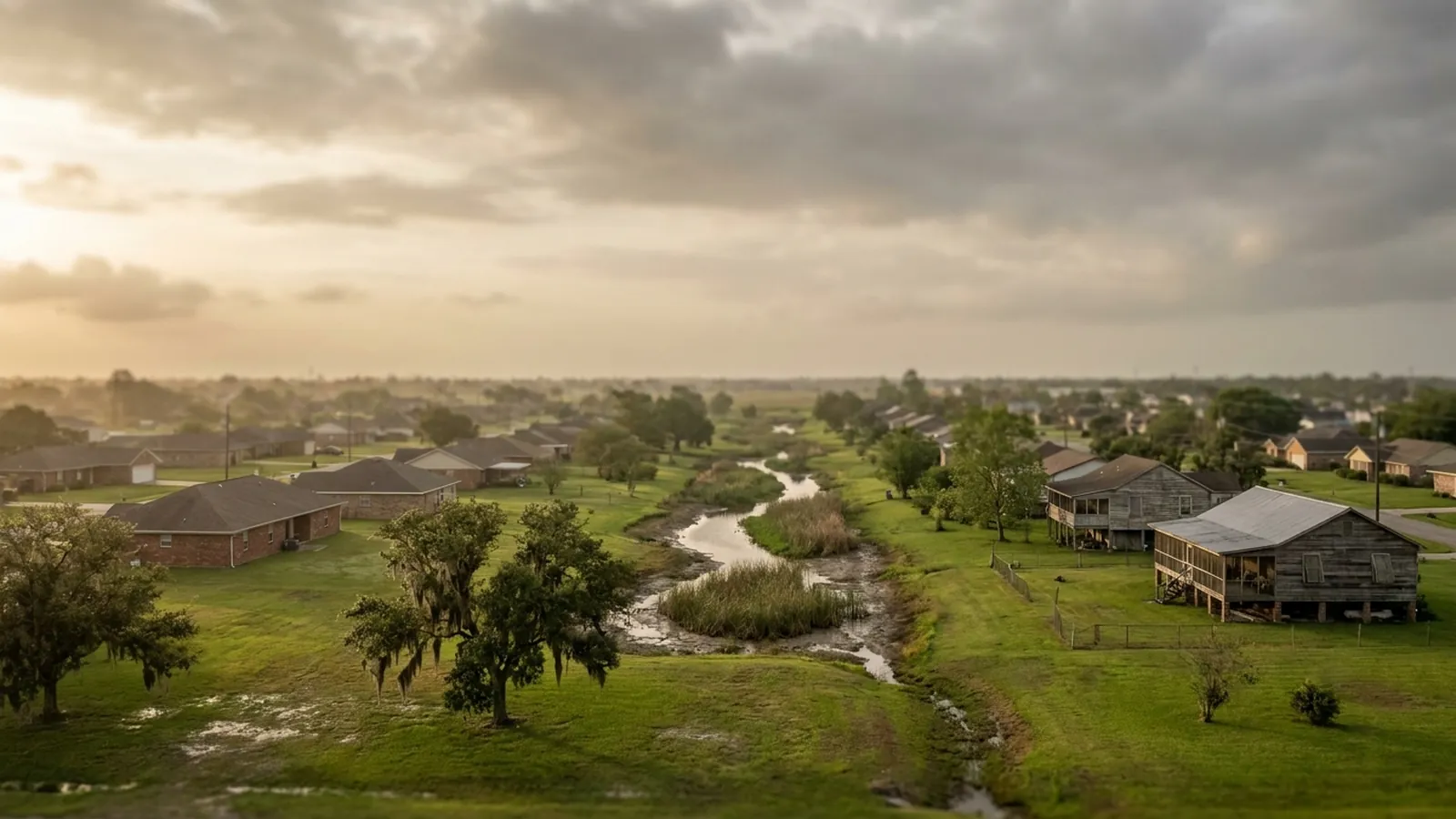
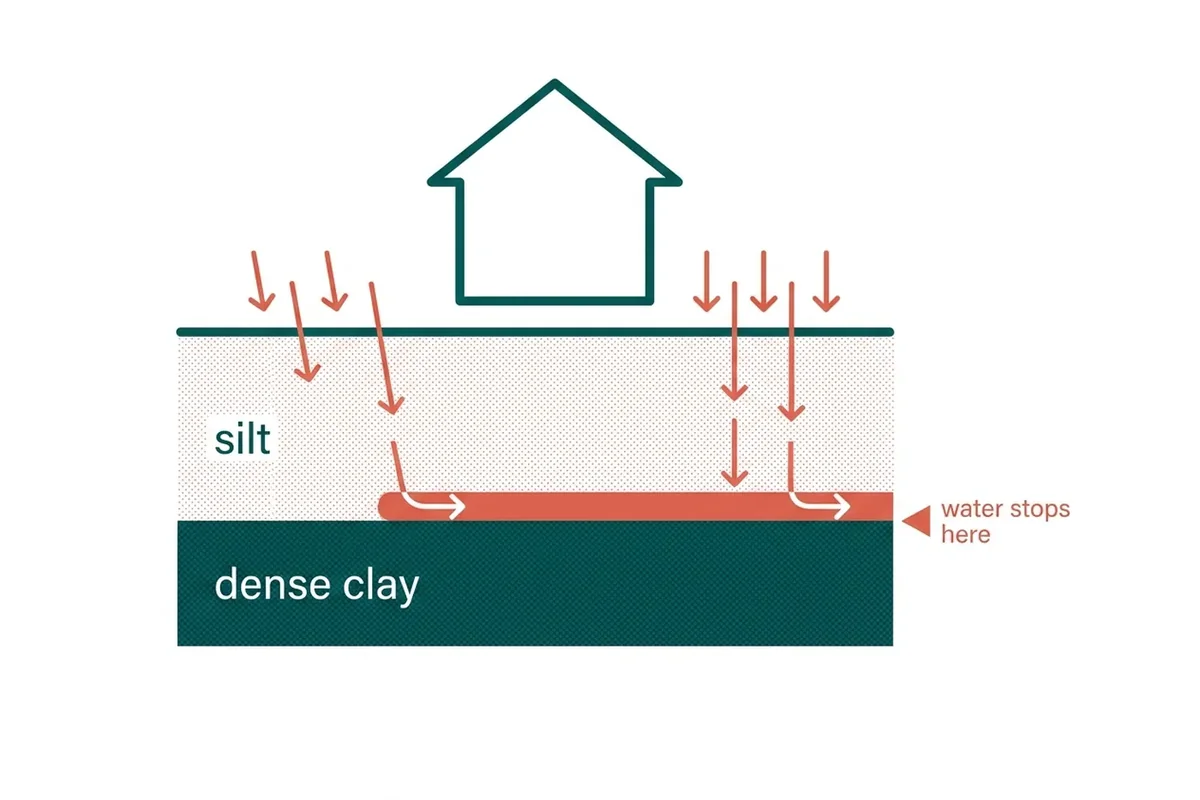
Foundation repair in Lafayette runs $4,000–$15,000 complete, with drainage at $1,500–$6,000. Local soil is a permeable silt over a dense horizon — permeability drops thirteenfold at about 14 inches, so water perches instead of draining. Ask whether the site visit is charged.
The numbers behind that, why it is the opposite of Baton Rouge, and what saturated ground does to a house.
What the soil survey actually records
Crowley silt loam is the dominant soil across the Lafayette prairie, and the USDA profile for it is unusually dramatic once you look at the permeability column rather than the texture column.
| Depth | Clay | Silt | Ksat | What that means |
|---|---|---|---|---|
| 0–7 in | 18.6% | 59.1% | 2.82 | Water soaks straight in |
| 7–14 in | 26.2% | 52.8% | 0.40 | Slowing sharply |
| 14–33 in | 48.8% | 40.6% | 0.21 | Effectively a floor |
A thirteenfold fall in saturated hydraulic conductivity across about fourteen inches. Patoutville, the other common prairie soil here, does the same thing — 0.55 at the surface dropping to 0.055 below, a tenfold change.
Water enters the top easily and then stops. On terrain as flat as this it cannot escape sideways either, so it sits in the layer your foundation is bearing on.
Why this is the opposite of Baton Rouge
Fifty-five miles away the ground behaves in a completely different manner, and a great many homeowners here have been given the Baton Rouge explanation by a company that works both markets.
| Lafayette — Crowley | Baton Rouge — Sharkey | |
|---|---|---|
| Clay at the surface | 18.6% | 84.3% |
| Linear extensibility | 1–4 | 19.8 |
| Ksat, surface to depth | 2.82 falling to 0.21 | 0.21 throughout |
| The problem | Water cannot leave | The clay changes volume |
Linear extensibility is the measure of how much a soil shrinks and swells. At 1 to 4, the dominant Lafayette prairie soil barely does it at all. So a diagnosis built around expansive clay — and a repair built around carrying the house past an active zone — is answering a question this ground is not asking.
What saturation does instead
Soil that is holding water carries less load than the same soil drained. That is not a controversial idea; it is the reason nobody builds on a bog. When the bearing layer under one part of a foundation stays wet for weeks at a time, it compresses under load in a way the drier ground beside it does not.
The result looks similar from inside the house — cracks, doors, a floor out of level — and is caused by something entirely different. It also responds to something entirely different: get the water out and the bearing recovers, which is not true of a house that has dropped into a shrinking clay.
Which reverses the usual repair order
| Step | Why it is here | Range |
|---|---|---|
| 1. Establish the profile | A hand-augered hole shows whether you are on prairie soil or alluvium | Often free; ask |
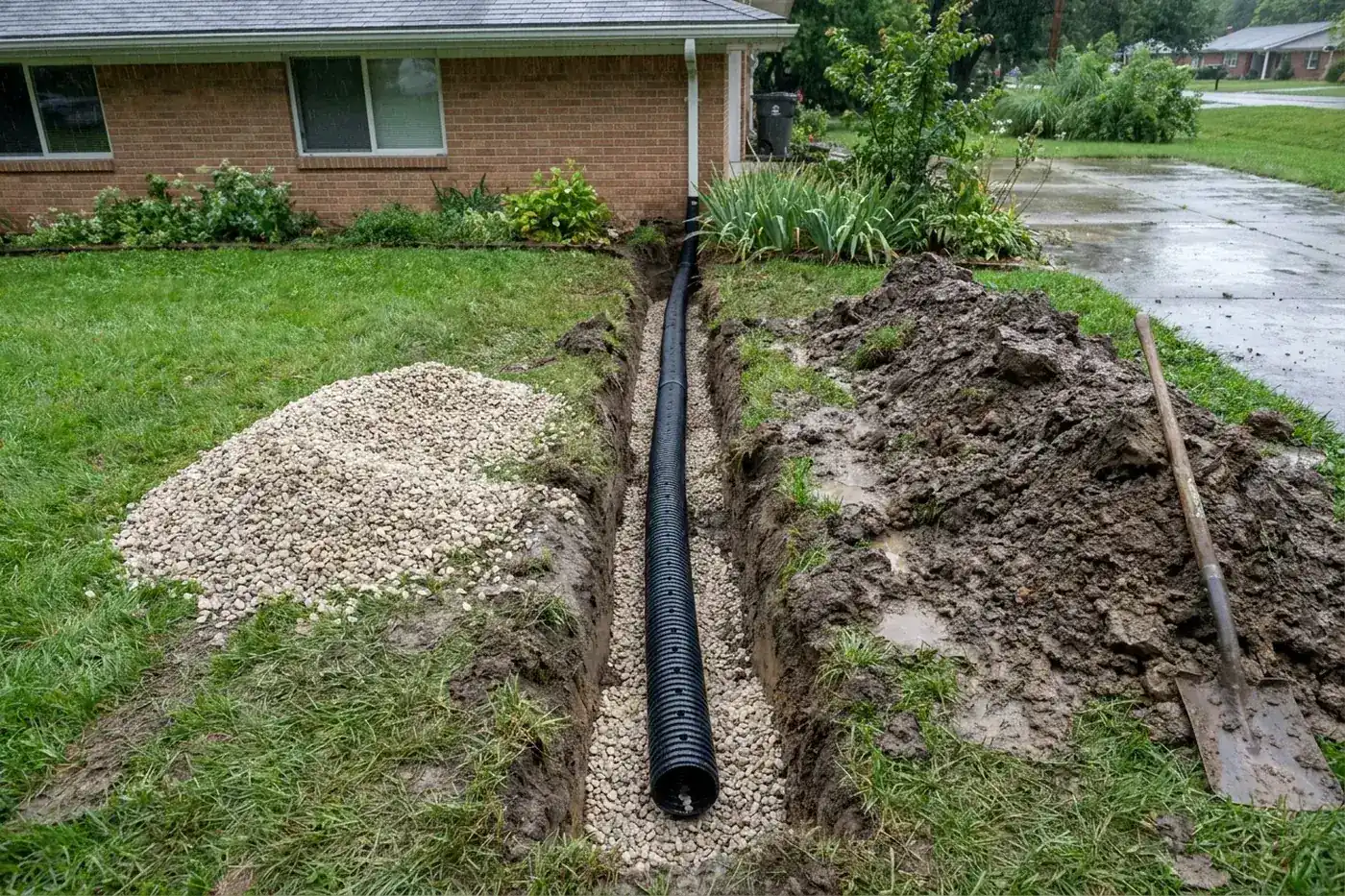
| 2. Get the water out | The cause, not a finishing touch | $1,500–$6,000 |
| 3. Support what softened | Piers on slab houses, releveling on raised ones | $2,500–$15,000 |
| 4. Repair what rotted | Where damp ground has been under a raised house for years | $1,500–$8,000 |
Reversed — piers first, drainage maybe later — you have supported a house while leaving the water sitting exactly where it was. That works until it does not, and the second visit is not cheaper than the first.
Perched water, answered plainly
How much does foundation repair cost in Lafayette?
A complete underpinning job runs $4,000-$15,000 with concrete piers at $1,200-$3,000 each. Subsurface drainage is $1,500-$6,000 and pier-and-beam releveling $2,500-$9,000. Many local specialists don't charge for the first site visit; ask when they call. Ask for floor levels and an augered hole while the specialist is there.
Is this the same clay problem they have in Baton Rouge?
This isn't the same clay problem they have in Baton Rouge, and that is the most useful thing on this page. Baton Rouge's Sharkey clay is 84 percent clay with a linear extensibility of 19.8. The Crowley silt loam under most of Lafayette measures 1 to 4. Our dominant soil barely shrinks and swells.
Then what is actually moving my house?
Water that cannot get away. The USDA records Crowley at 18.6 percent clay and Ksat 2.82 at the surface, changing at about 14 inches to 48.8 percent clay and Ksat 0.21 - a thirteenfold drop. Rain soaks in, hits that floor, and stays.
Why does saturated ground matter if it is not swelling?
Because saturated soil carries less load than the same soil drained. Bearing capacity falls, the foundation settles into the softened area, and because the wetting is uneven the settlement is uneven too. That is a different failure from heave and it wants a different repair.
So drainage is the actual fix?
On a large share of houses here, yes - or at least the first half of it. Piering a house while the ground around it stays saturated treats the symptom and leaves the cause running. That is why it pays to ask for drainage to be priced before piers rather than after.
Does this apply everywhere in Acadiana?
Not uniformly. The prairie soils behave this way; ground nearer the Vermilion and the coulees is alluvial and behaves differently again. A hand-augered hole in your own yard settles which one you are on, and it takes ten minutes.
Book a Lafayette site visit
The single most useful thing you can tell us is what your yard does after heavy rain — whether water stands, for how long, and in which corner. On this ground that observation narrows the diagnosis further than any description of a crack. Say whether the house is raised or on a slab too. A local specialist serving Lafayette calls you back.