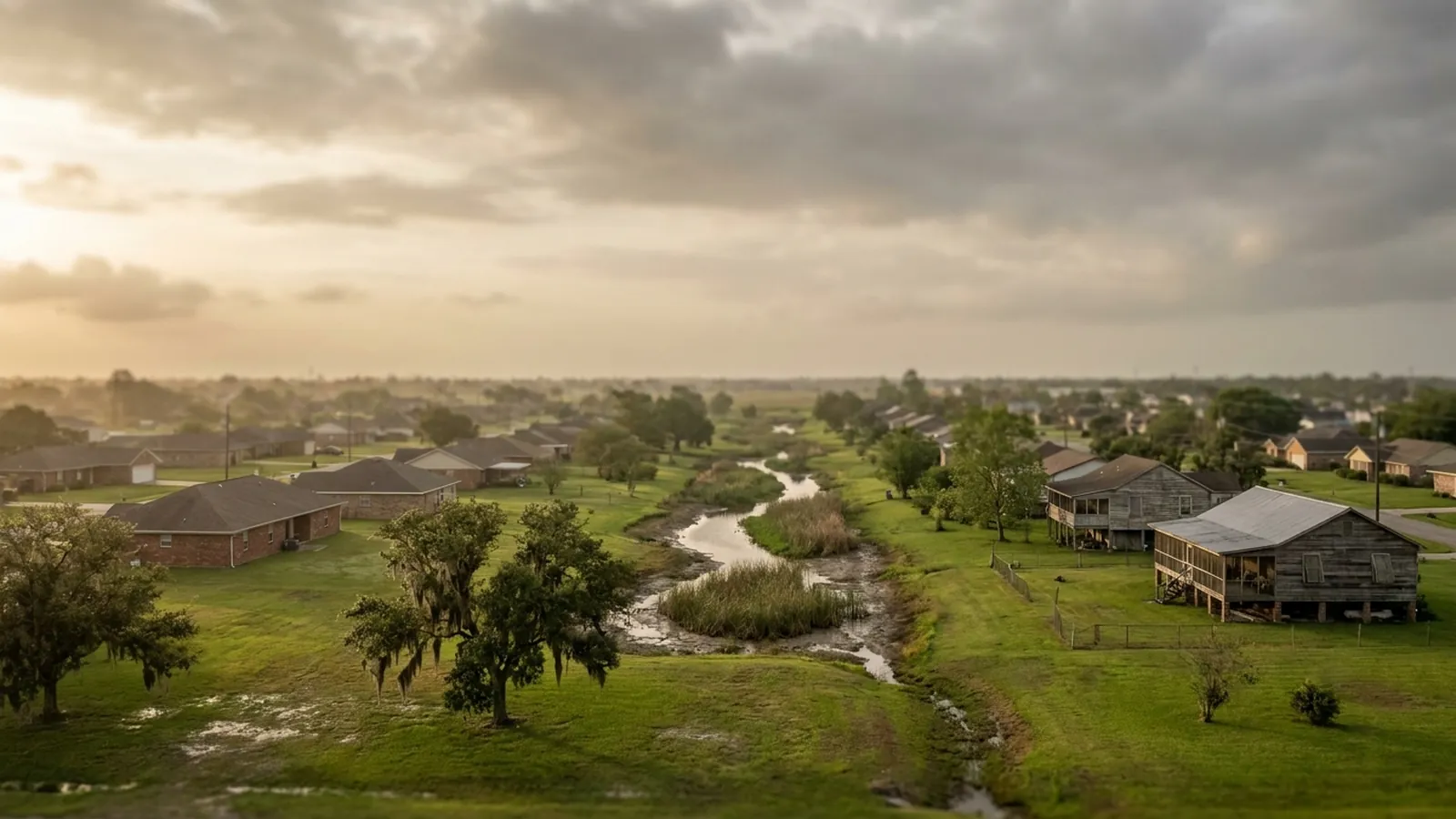
Subsurface drainage in Lafayette runs $1,500–$6,000 and is the primary foundation repair on prairie soils, not an add-on. Water perches on a dense horizon at about 14 inches and cannot drain down or, on flat ground, sideways. Ask whether the site visit is charged.
The difference between surface and subsurface, why the discharge point is the hard part, and how to check it worked.
Surface drainage and subsurface drainage are different jobs
They get quoted interchangeably and they solve different problems, so it is worth being precise about which one your house needs.
Surface drainage handles water that is running across the ground: grading, swales, downspout extensions, catch basins at low points. It matters, it is cheap, and it does nothing at all about water that has already soaked in.
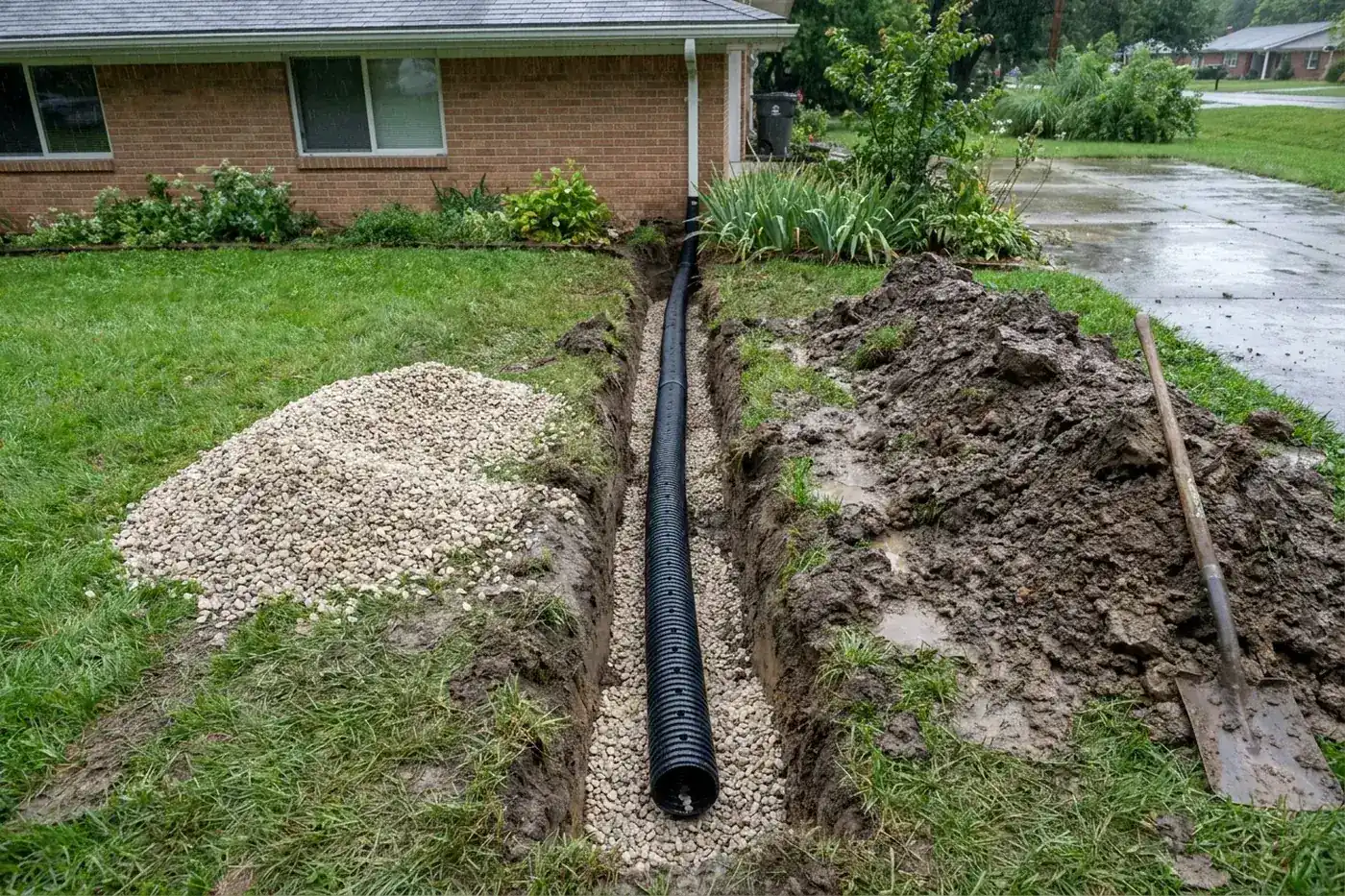
Subsurface drainage handles water that is sitting in the soil. A perforated line is set in gravel below the level the water is perching at, wrapped so it does not silt up, and run to somewhere lower. That is the one that changes what the ground under your foundation is doing.
On a profile that drops thirteenfold in permeability at fourteen inches, the second one is the repair.
The discharge point is the design problem
Digging a trench is straightforward. Deciding where the water goes, on terrain with almost no fall, is the part that takes thought and the part that separates a drain that works from one that becomes a buried reservoir.
| Option | When it works | What to watch |
|---|---|---|
| Gravity run to a lower point on the property | Any usable fall exists | Fall is often measured in inches here, so the survey matters |
| Discharge to a ditch or street | The municipality permits it | Rules vary by parish and by street; ask for this to be checked, not assumed |
| Sump and pump | Nothing on the property is lower | It is a machine, so it needs power, maintenance and somewhere to send water |
| Dry well or infiltration pit | Rarely useful here | Infiltration needs somewhere for water to infiltrate to, which is the thing this soil lacks |
The last row is worth reading twice. A soakaway on a soil whose defining feature is that water cannot soak away is an expensive hole.
What a scope should state
- Depth of the line, relative to the horizon the water is perching on
- Where the discharge goes, named specifically, and whether permission is needed
- The fall achieved along the run, as a figure rather than a promise
- Filter treatment — on silty soil an unwrapped line silts up and stops working, quietly, in a few years
- Floor levels before, so the effect can be measured later rather than argued about
How to check it worked
Not by asking whether the yard looks better. Standing water usually improves the same week, which is satisfying and proves very little about bearing.
Ask for floor levels before the work and again several months later, across a wet season. If the structure has stopped moving, the numbers say so. If it has not, then drainage was not the whole story on your house and the next step is support — but at least it is support installed on ground that is now draining.
Drainage, answered plainly
What does subsurface drainage cost in Lafayette?
Typically $1,500-$6,000, set by the length of the run, the depth, and where the water can be discharged to. On flat ground the discharge point is frequently the hardest part of the design rather than the trench itself.
Why is drainage the main repair here rather than an extra?
Because the local failure mode is saturation. Water perches on a dense horizon about 14 inches down and cannot drain away, the bearing soil softens, and the foundation settles into it. Removing the water addresses the cause; piering addresses the consequence.
Where does the water actually go?
That is the design question. Options are a gravity run to a lower point, a street or ditch discharge where the municipality permits it, or a sump and pump where nothing on the property is lower. Flat terrain is what makes this genuinely a design job.
Will a surface drain do the same thing?
A surface drain won't do the same thing, and confusing the two is common. Surface drainage moves water that is already running across the ground. This problem is water that has soaked in and stopped, which needs a perforated line set below the level it is sitting at.
How long before it makes a difference?
Standing water in the yard usually improves immediately. Bearing recovery in the soil is slower and seasonal, which is why floor levels belong before the work and again months later, rather than declaring victory on the day.
Do I need this if my yard looks dry?
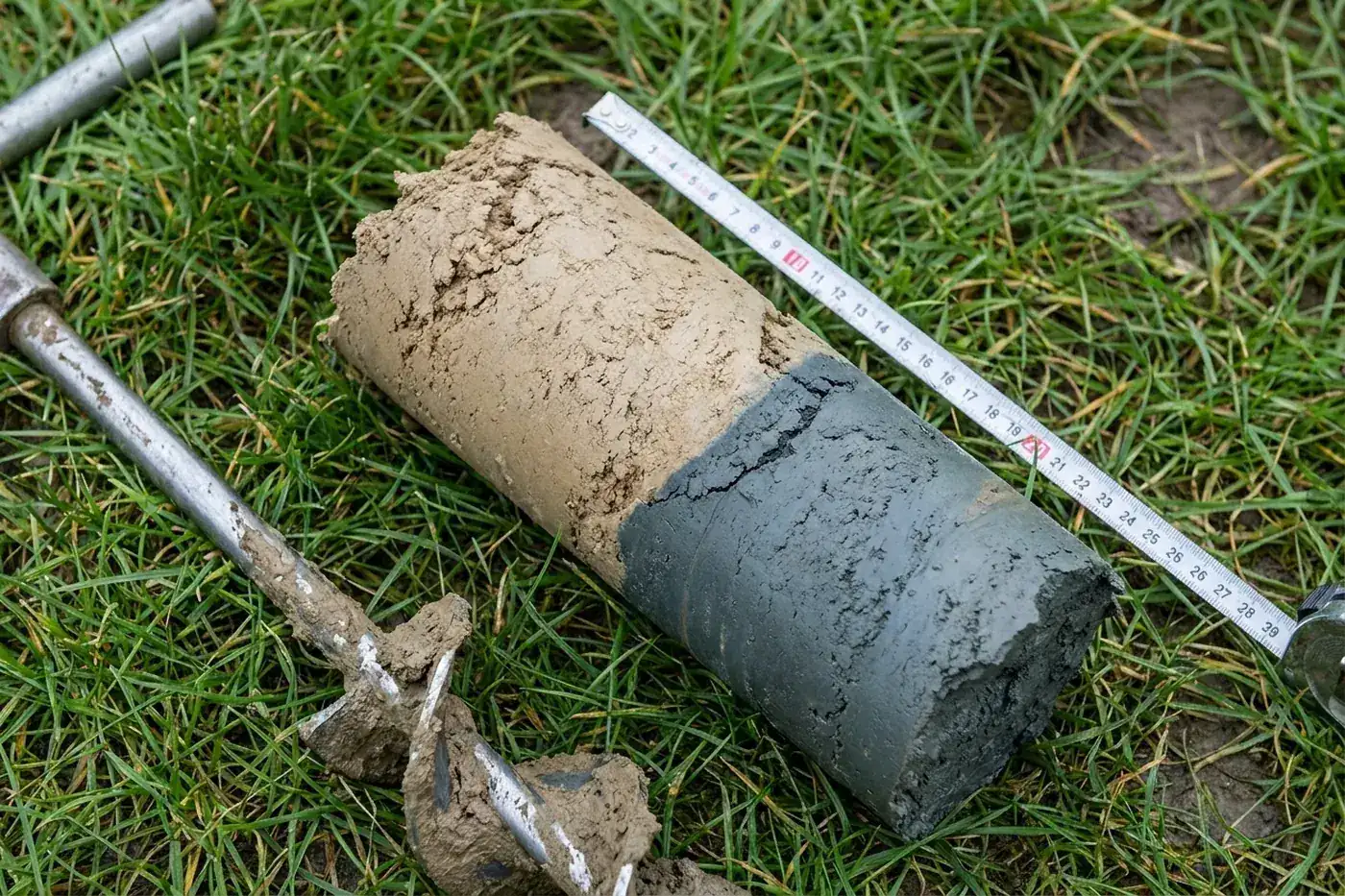
Possibly not, and the augered hole answers it. A yard can look fine at the surface while the horizon below is holding water. Ten minutes with a hand auger tells you more than a walk around in dry weather.
Book a Lafayette site visit
The single most useful thing you can tell us is what your yard does after heavy rain — whether water stands, for how long, and in which corner. On this ground that observation narrows the diagnosis further than any description of a crack. Say whether the house is raised or on a slab too. A local specialist serving Lafayette calls you back.