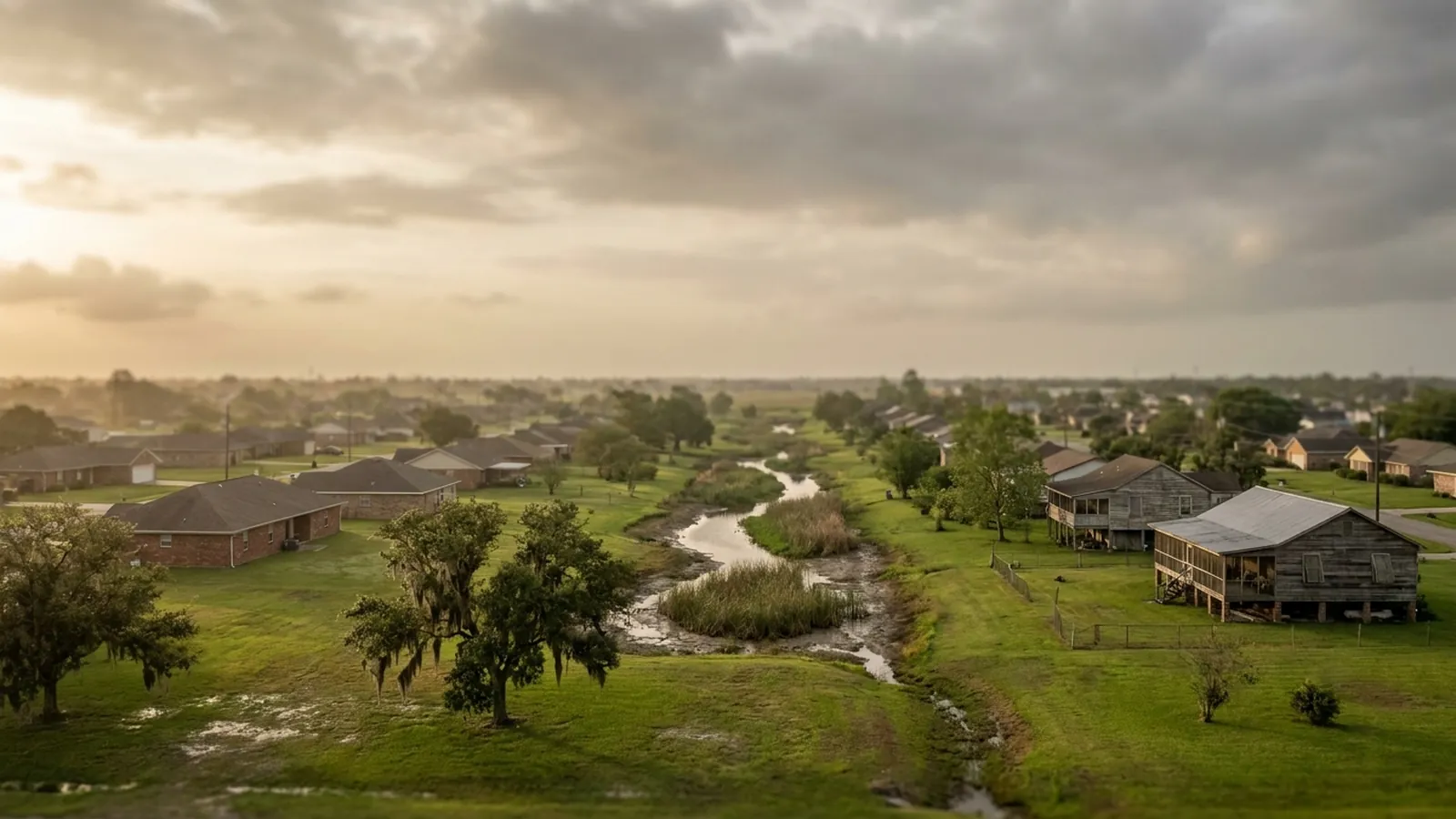
Lafayette Foundation Co. passes requests from five Acadiana parishes to one independent local specialist: subsurface drainage, pier-and-beam releveling, concrete piers and structural timber repair. Many local specialists don't charge for the site visit; ask when they call. Ask for the drainage half to be priced first, because on this ground it is the cause.
Why foundation repair here should start with the cheaper half
Because it is the half that addresses why your ground softened, and because on a real share of local houses it is the whole answer. A contractor who says so gives up the bigger invoice on every job where it turns out to be true, which is the reason the advice is worth hearing.
The alternative — open with underpinning, mention drainage at the end as an optional extra — produces a bigger invoice and a supported beam line sitting on ground that carries on doing exactly what it was doing. It is not fraud. It is the wrong order, applied confidently.
Three things to be wary of
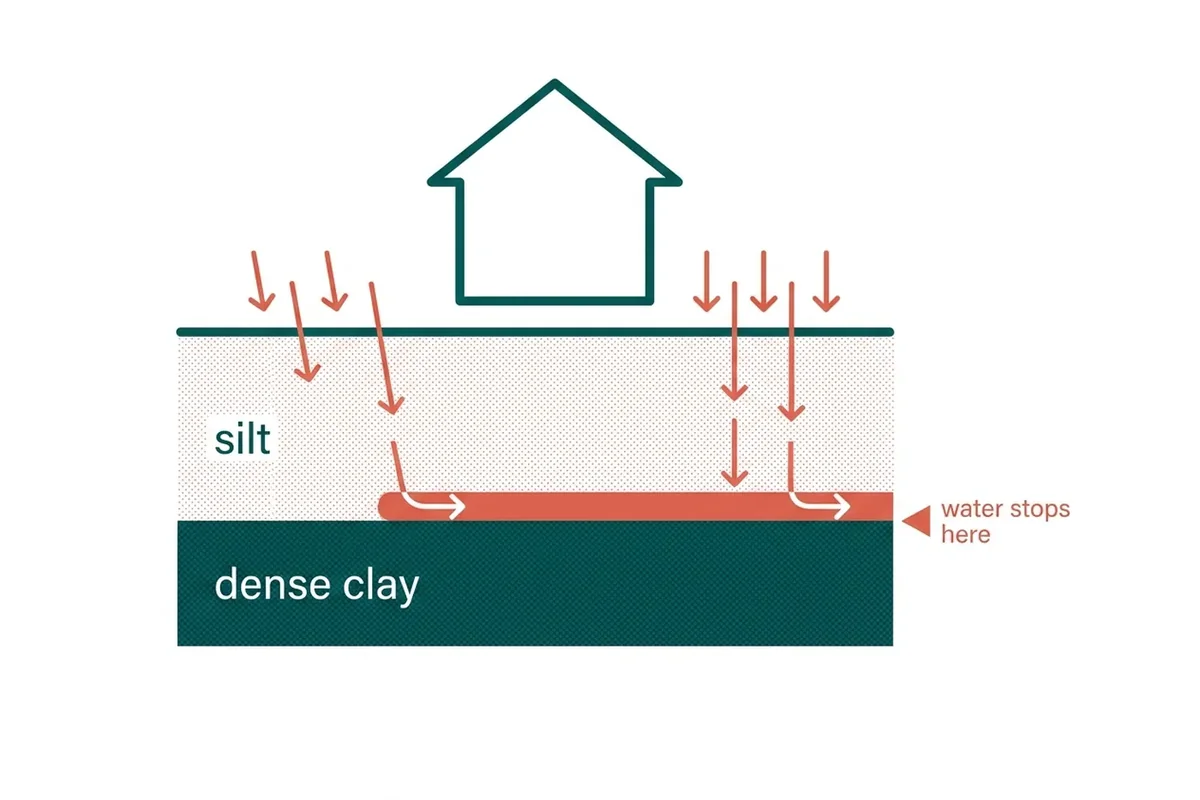
1. Being told it is expansive clay. The USDA gives Crowley silt loam a linear extensibility of 1 to 4. Baton Rouge's Sharkey clay measures 19.8. The dominant soil here barely shrinks and swells, and a diagnosis borrowed from 55 miles away is a diagnosis of somebody else's ground.
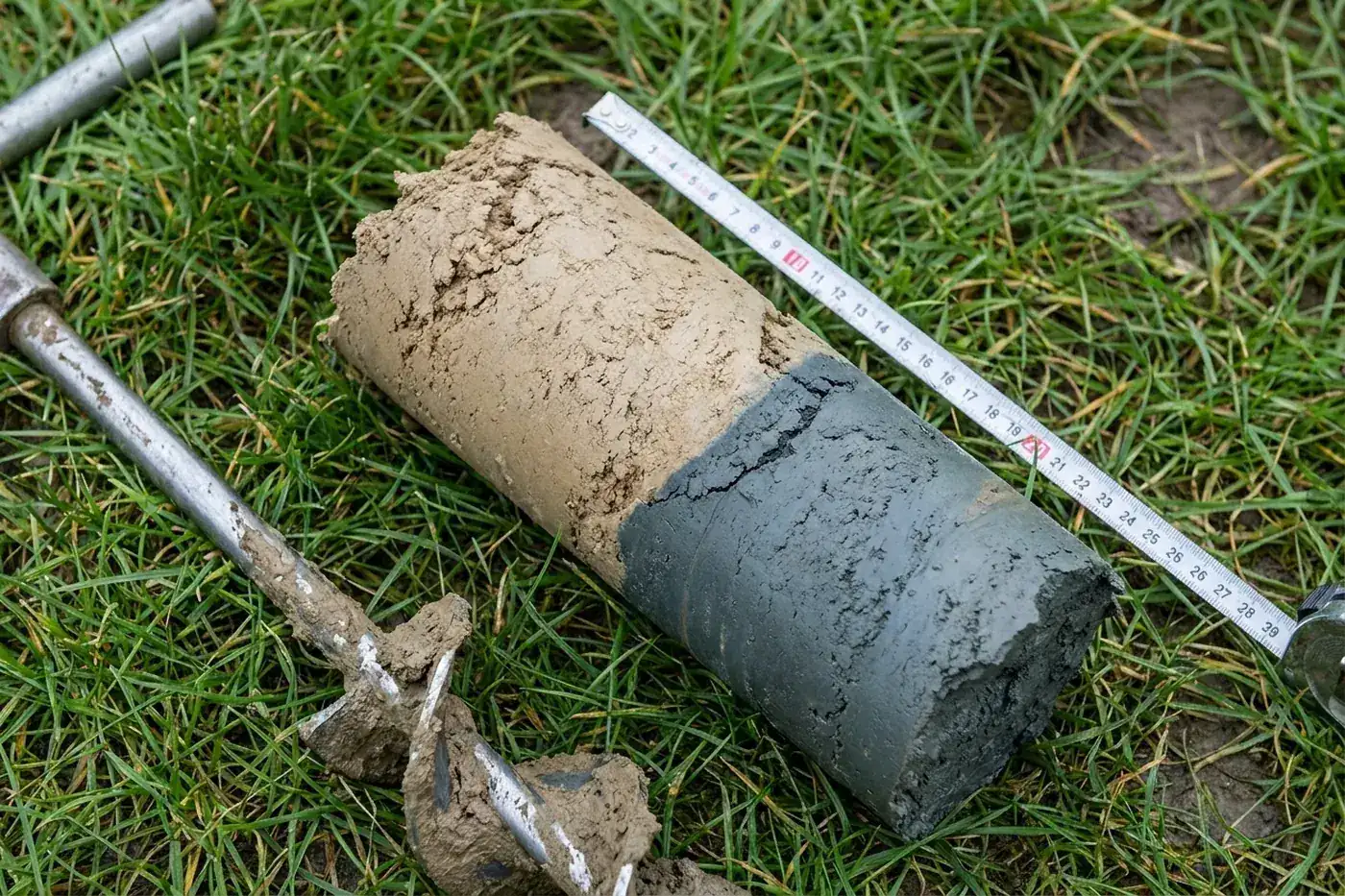
2. A quote before any measuring. Floor levels and an augered hole should come first on any job, and it is worth asking whether the first visit is charged. A price offered before either is a price that has to cover being wrong.
3. Work outside the trade. Plumbing tests belong to plumbers, engineering to engineers, and termite treatment to a licensed pest control operator. A foundation specialist repairs structure and dries ground, and a good one hands the rest over rather than improvising around it.
What to ask for in writing
- Levels measured ahead of any price being mentioned, with a copy left behind
- What the augered hole showed — your profile, not the regional map
- A named discharge point for any drainage, and whether permission is needed
- Wherever piers appear: the depth assumed and the price past it, in the scope
- Saying when the honest scope is drainage and nothing structural at all
Why the soil survey keeps appearing on this site
Because we are contradicting something a homeowner has probably already been told, and an assertion is a poor way to do that. The numbers on these pages — permeability falling from 2.82 to 0.21, extensibility of 1 to 4 against 19.8 — come from the USDA soil survey for Lafayette Parish and East Baton Rouge Parish, and anybody can look them up.
That seems like the right standard for a trade with no meaningful barrier to entry and a habit of diagnosing from the driveway. The cost guide shows what that approach produces in numbers, and the site visit page covers what happens on the day.
What the drainage job is actually competing against
On a fair number of local houses, nothing. If the water is perching and the floor is still within tolerance, the honest scope is a drain and no structural work at all — and the competition for that job is a landscaper, not another foundation repair company.
A good local specialist would rather win the drainage job and keep the customer than win the underpinning job once. That is not principle so much as arithmetic: this is a market where people talk to their neighbours, and a house that stays fixed is worth more to a contractor than a house that was oversold.
Questions people put to us
How long has the specialist worked Acadiana?
Ask them when they call. Everything else on this page points at a figure somebody else published and invites you to go and read it. A tenure figure typed here would have no such backing.
Is the specialist licensed?
Ask the specialist who calls you back for their licence number or insurance certificate, and verify it - a number typed onto a web page is worth nothing until you have verified it independently.
Is leading with drainage just a way to upsell?
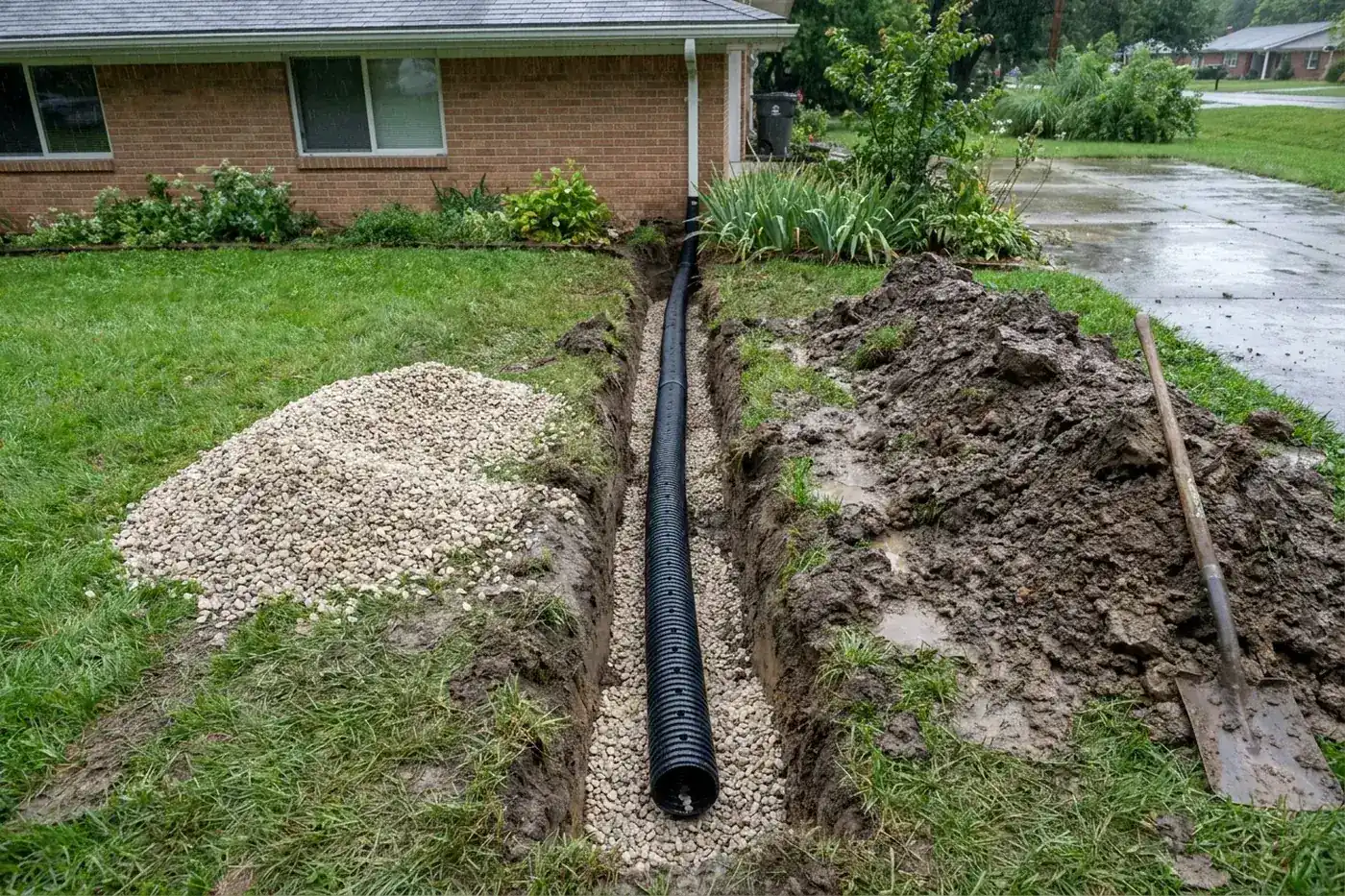
It works the other way round. Drainage is the cheaper half - $1,500 to $6,000 against $4,000 to $15,000 for underpinning - and on a meaningful share of houses it is the only half needed. Leading with it costs the contractor the larger invoice.
Are you engineers?
We are not, and neither is the foundation specialist. A contractor is not a design practice, so no stamped reports, borings or certifications come out of a site visit. Where a job is big enough to warrant it, ask to be pointed toward an engineer who has nothing to gain from whichever repair gets chosen.
Book a Lafayette site visit
The single most useful thing you can tell us is what your yard does after heavy rain — whether water stands, for how long, and in which corner. On this ground that observation narrows the diagnosis further than any description of a crack. Say whether the house is raised or on a slab too. A local specialist serving Lafayette calls you back.