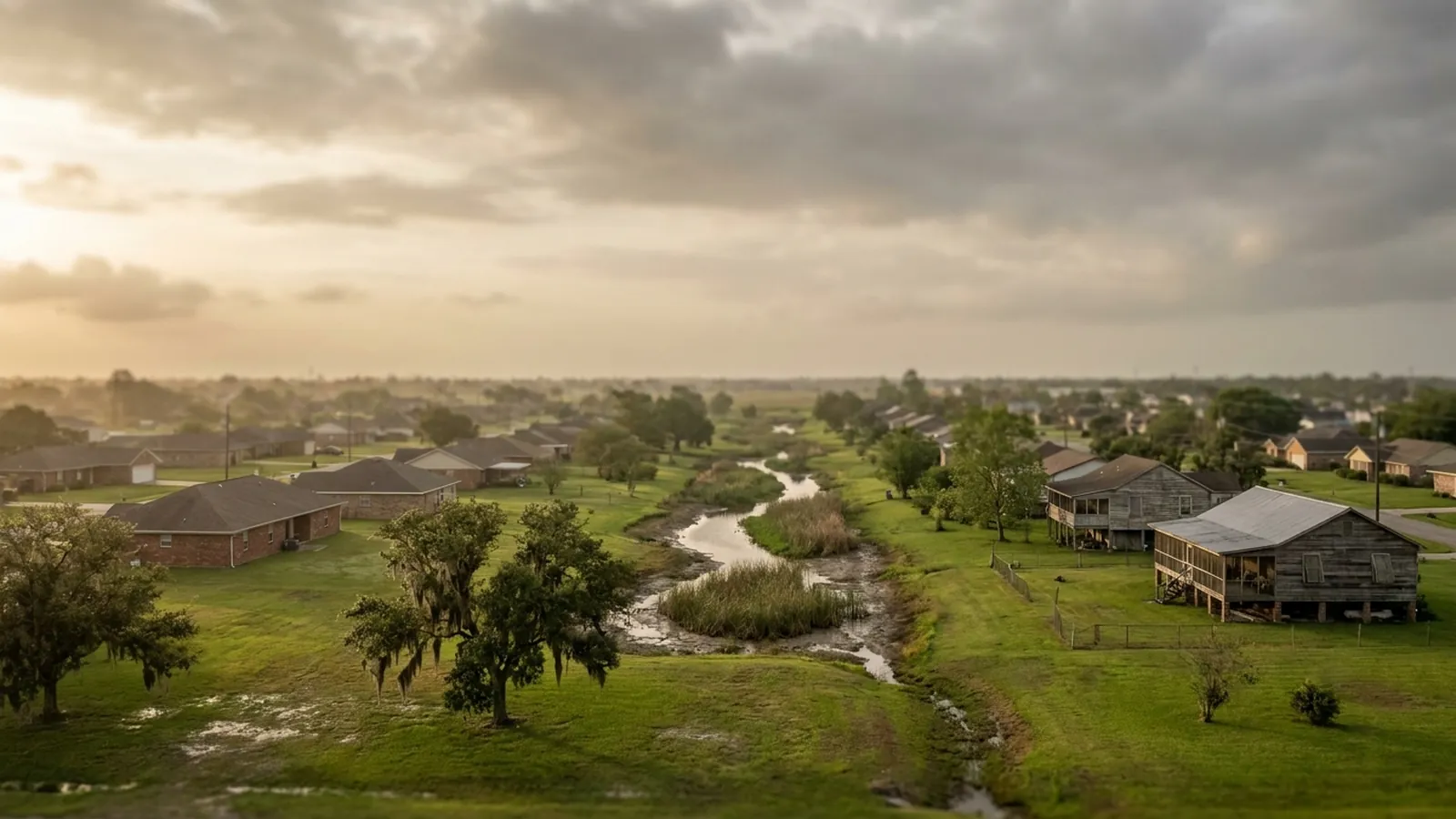
Foundation repair in Lafayette costs $4,000–$15,000 for complete underpinning and $1,500–$6,000 for subsurface drainage. Those are two separate purchases — taking the water away, and supporting what the water softened. Ask whether the site visit is charged.
What each half buys, when you only need one of them, and the invoices that belong to other trades.
Half one: take the water away
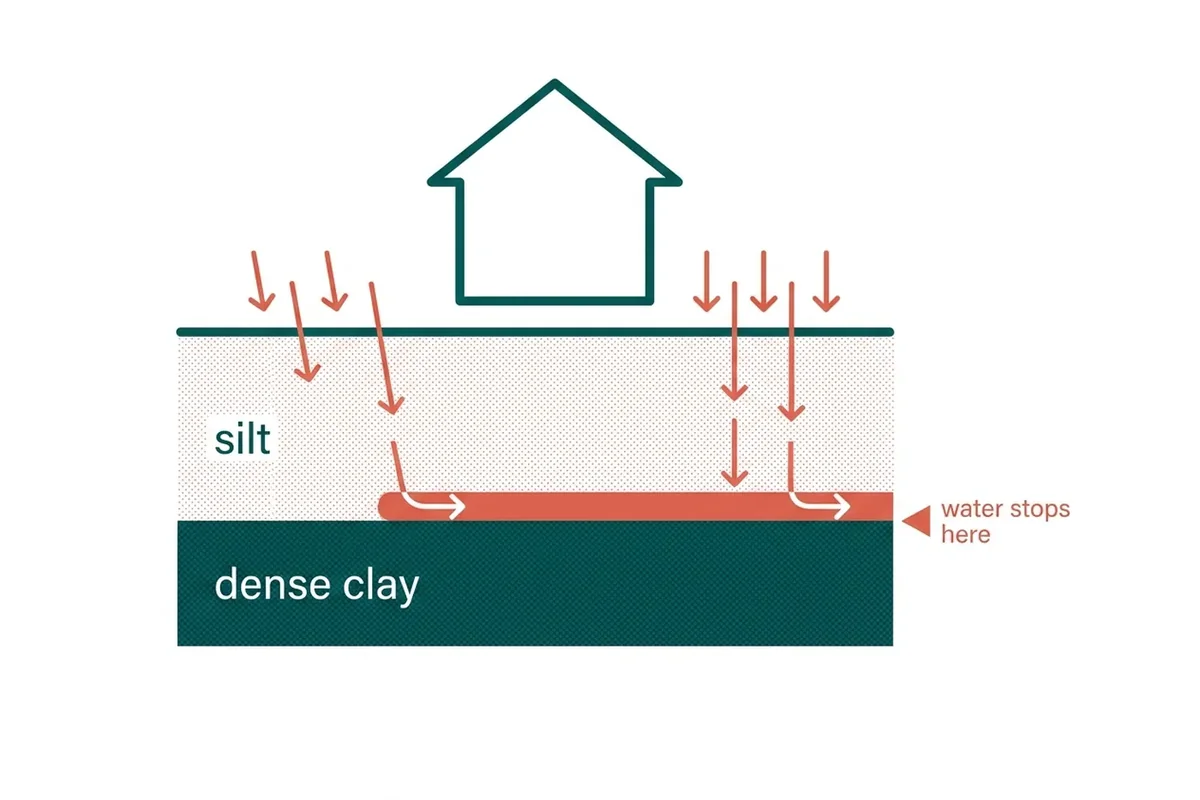
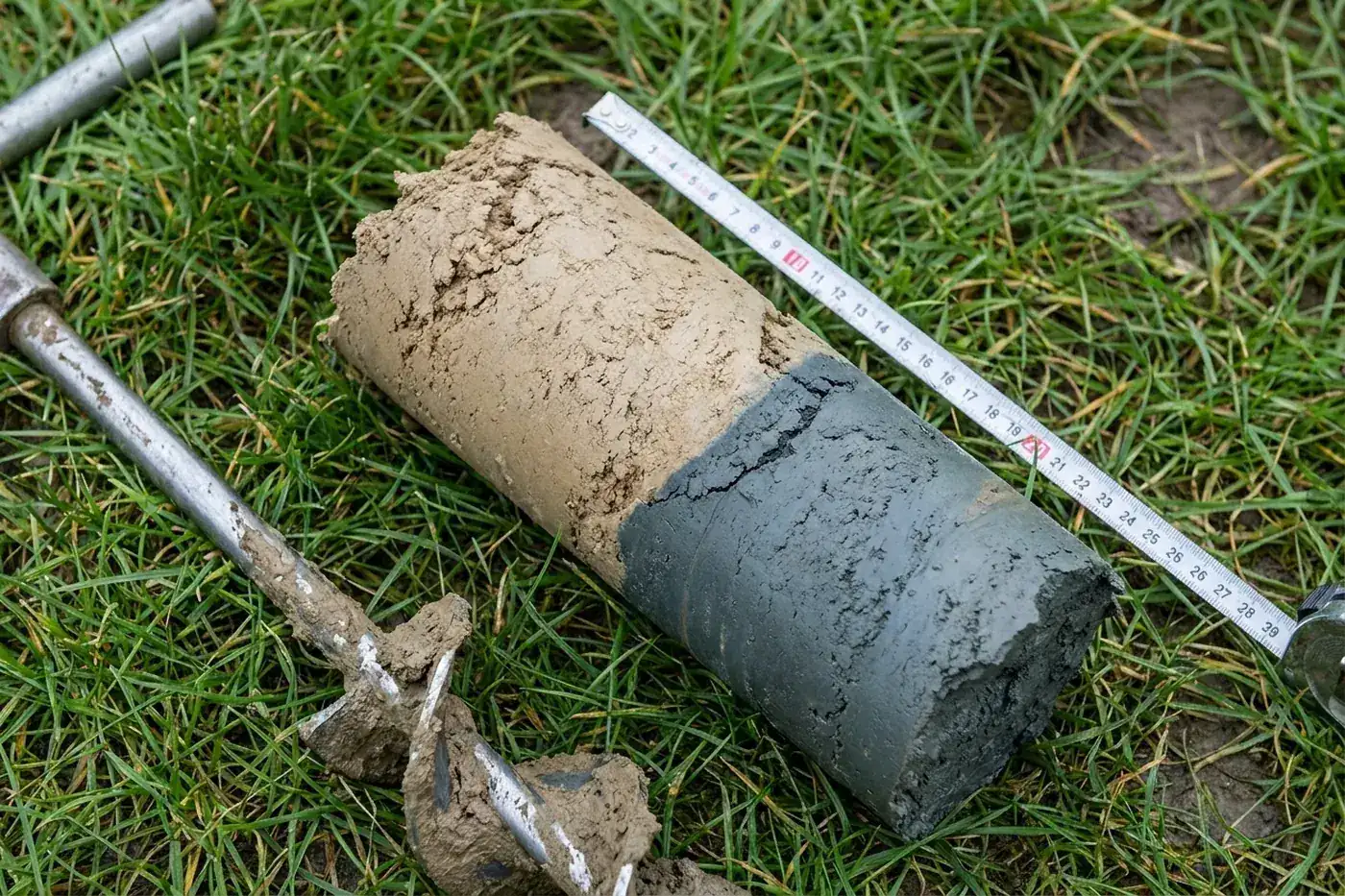
This is the cause. Water perches on a dense horizon about fourteen inches down, cannot drain through it, and on flat ground cannot leave sideways either. The soil under your foundation stays saturated and saturated soil carries less load.
| Work | Range | What drives it |
|---|---|---|
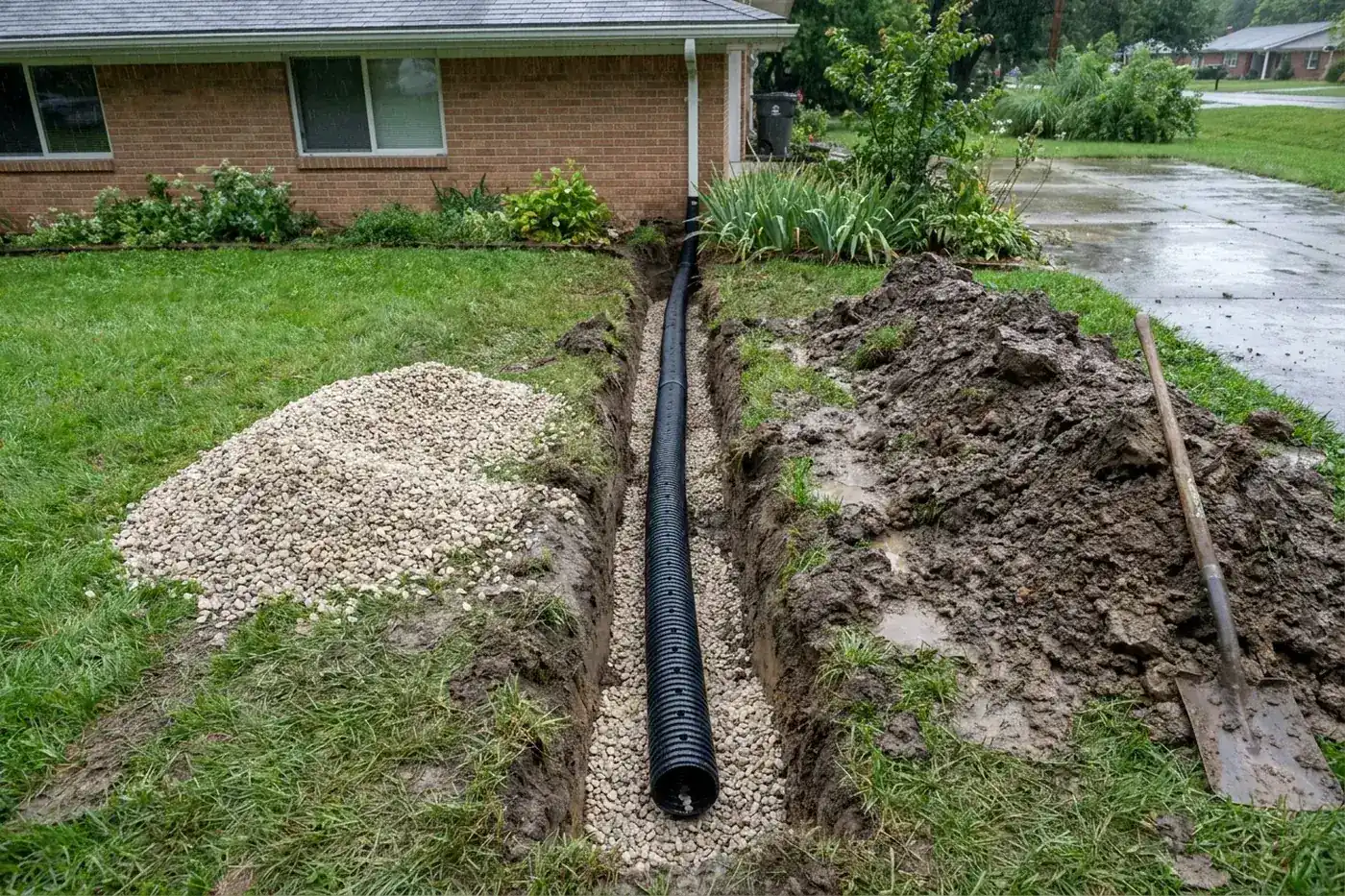
| Subsurface drainage | $1,500–$6,000 | Run length, depth, and how hard the discharge point is |
| Grading and surface correction | $500–$2,500 | Frequently bundled with the above rather than sold alone |
| Sump and pump, where nothing is lower | Add $1,000–$3,000 | Only where gravity genuinely has nowhere to go |
On a flat site the discharge point is the design problem and the trench is the easy part. A drain with nowhere legal or workable to send water is a buried reservoir, and a good specialist will say so rather than dig one.
Half two: support what softened
This is the consequence, and what it costs depends entirely on how your house is built.
| Work | Range | Applies to |
|---|---|---|
| Concrete piers | $1,200–$3,000 each | Slab houses where bearing has gone |
| Complete slab underpinning | $4,000–$15,000 | Count multiplied by assumed depth |
| Pier-and-beam releveling | $2,500–$9,000 | Raised houses, which fail by sloping rather than tilting |
| Sill and joist repair | $1,500–$8,000 | Raised houses where damp has reached the timber |
| Cosmetic crack repair | $400–$1,500 | Last, after the structure has settled into position |
When you only need half one
More often than the industry lets on. Where the water is clearly perching, the yard holds standing water, and the floor levels come back within construction tolerance, the honest scope is drainage and nothing else.
That outcome is worth actively looking for, because it is the difference between a $2,500 job and an $11,000 one. It is also why the site visit should measure the floor before anybody talks about piers — without that measurement there is no way to know which conversation you are in.
When you need both, and in what order
Water first. Always. A house underpinned while the ground around it stays saturated has a supported beam line and an unchanged problem — the interior slab, the perimeter soil and the plumbing underneath all carry on doing what they were doing.
The reverse order is common in quotes because piers are the larger invoice and drainage looks like landscaping. On a soil profile that drops thirteenfold in permeability at fourteen inches, it is exactly backwards.
Why two quotes differ by thousands
Two reasons, and both are usually invisible on the page. The first is an unstated pier depth: bidders agree on counts far more often than they agree on how deep each one goes. Ask what depth was assumed and what a section costs beyond it.
The second is simply that one document priced the drainage and the other did not. That is not always dishonesty; a company that only installs piers will quote piers. But it makes the cheaper-looking bid the more expensive one over five years.
Invoices that belong to other trades
- A plumber, where a line under the slab is suspected. Different trade, and the party recommending a test should not be selling the result
- A structural engineer, on substantial jobs — independent of any contractor, producing a scope several bidders can answer
- A licensed pest control operator, if timber damage turns out to involve insects. A foundation specialist repairs the structure and stops there
- Cosmetic trades, for finishing after the structural work has settled
Money questions
What does foundation repair cost in Lafayette?
Complete underpinning runs $4,000-$15,000 with concrete piers at $1,200-$3,000 each. Subsurface drainage is $1,500-$6,000, pier-and-beam releveling $2,500-$9,000, and sill or joist repair $1,500-$8,000. Ask whether the site visit is charged.
Why are there two halves rather than one price?
Because on this soil the cause and the consequence are separate jobs. Taking the water away addresses why the ground softened. Supporting the structure addresses what happened while it was soft. A quote covering only the second is describing half the work.
Can I do just the drainage?
Frequently, yes - if the structure has not moved measurably yet. That is a genuinely common outcome and the cheapest one available. Where the floor is already out of level, drainage stops it worsening but does not recover the elevation.
Can I do just the piers?
You can, as long as you know what you are buying. Piers carry the beam and change nothing about the water, so the interior slab, the perimeter and the plumbing beneath all carry on sitting in wet ground. It works until it does not.
Why do two quotes differ so much?
Nearly always a pier depth that neither page bothered to print. Put the question to both bidders directly - how far down, and what does another section cost? The runner-up explanation is simpler still: one of them included drainage and the other left it out.
Does insurance cover any of it?
Rarely. Gradual ground movement is generally treated as a maintenance matter and excluded, and mentioning that up front seems better than letting somebody plan around a claim. A sudden identifiable event is a different conversation for your adjuster.
What is not in these numbers?
Plumbing repairs, which belong to a licensed plumber. Engineering, where a job warrants an independent structural engineer. Pest treatment, which is a licensed pest trade. And cosmetic finishing, which comes last and can go to somebody else entirely.
Book a Lafayette site visit
The single most useful thing you can tell us is what your yard does after heavy rain — whether water stands, for how long, and in which corner. On this ground that observation narrows the diagnosis further than any description of a crack. Say whether the house is raised or on a slab too. A local specialist serving Lafayette calls you back.