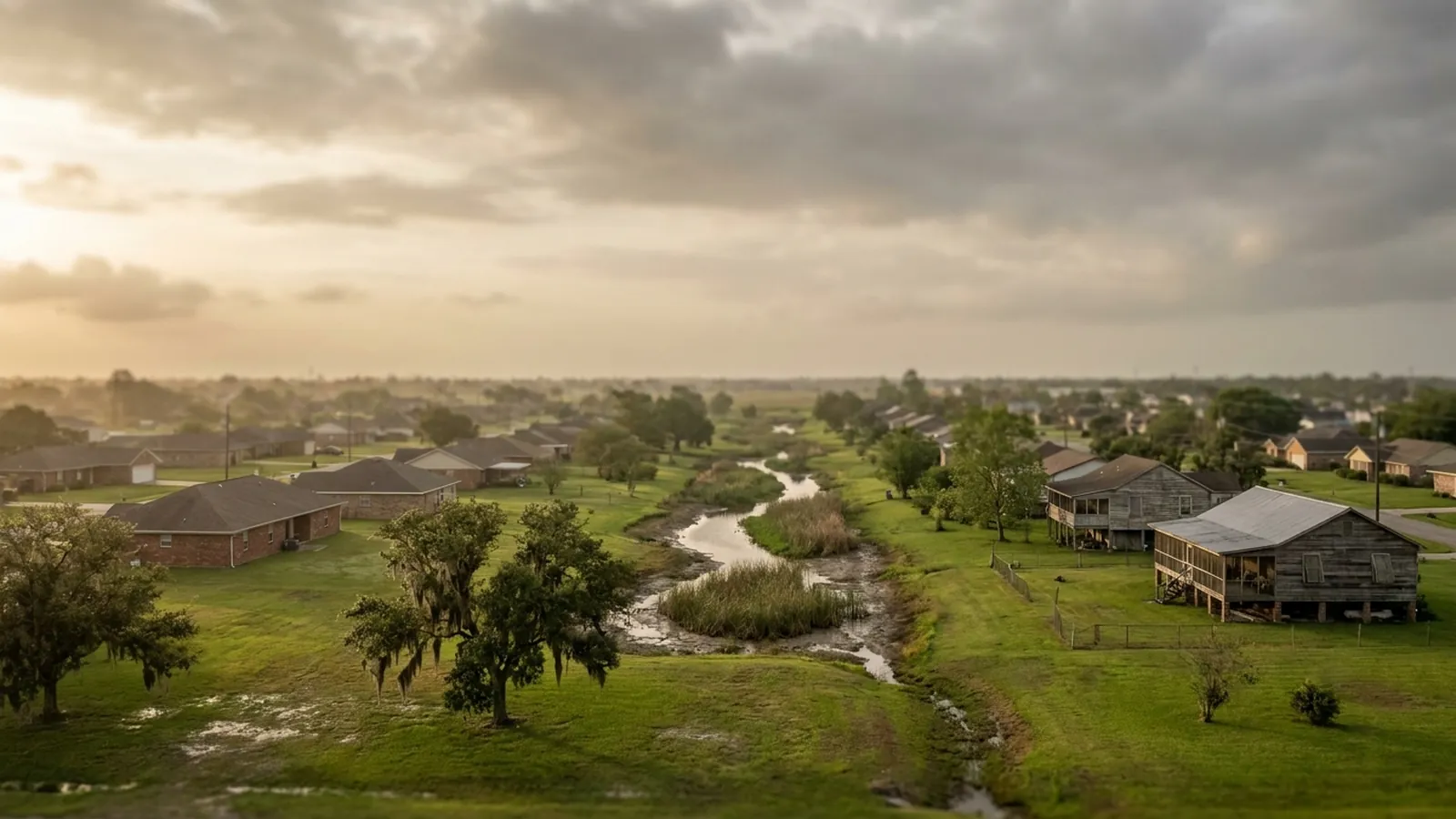
Foundation repair in Maurice runs $4,000–$15,000; ask whether the first visit is charged. Heading south the water table itself rises — and where that is the problem rather than perching, drainage has less to offer.
Lower, wetter, and closer to the water table
Heading south from Lafayette the ground gets lower and the water table gets nearer the surface. In Maurice the perched water problem overlaps with a genuinely high water table, and the two are not the same thing even though they produce similar symptoms.
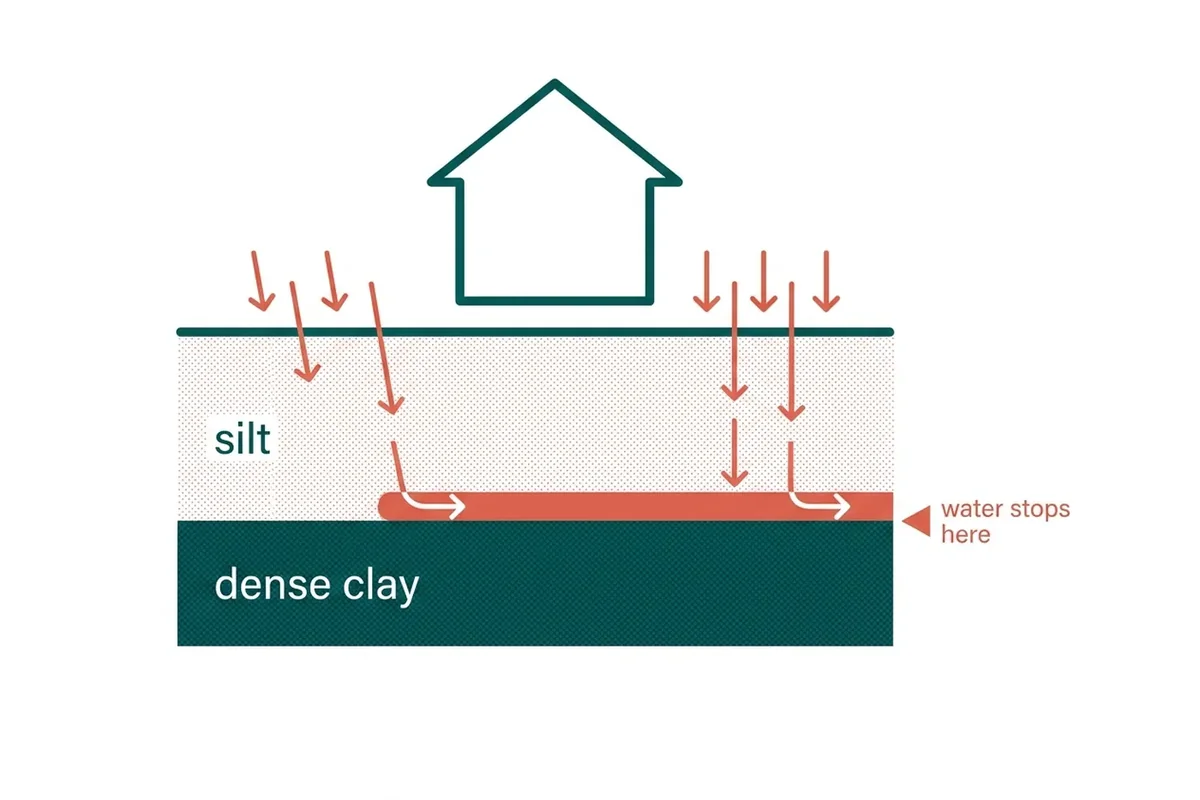
Perched water sits on a layer. A high water table is the regional groundwater level itself. Telling them apart matters because a drain that works against one may achieve very little against the other.
Which changes what drainage can promise
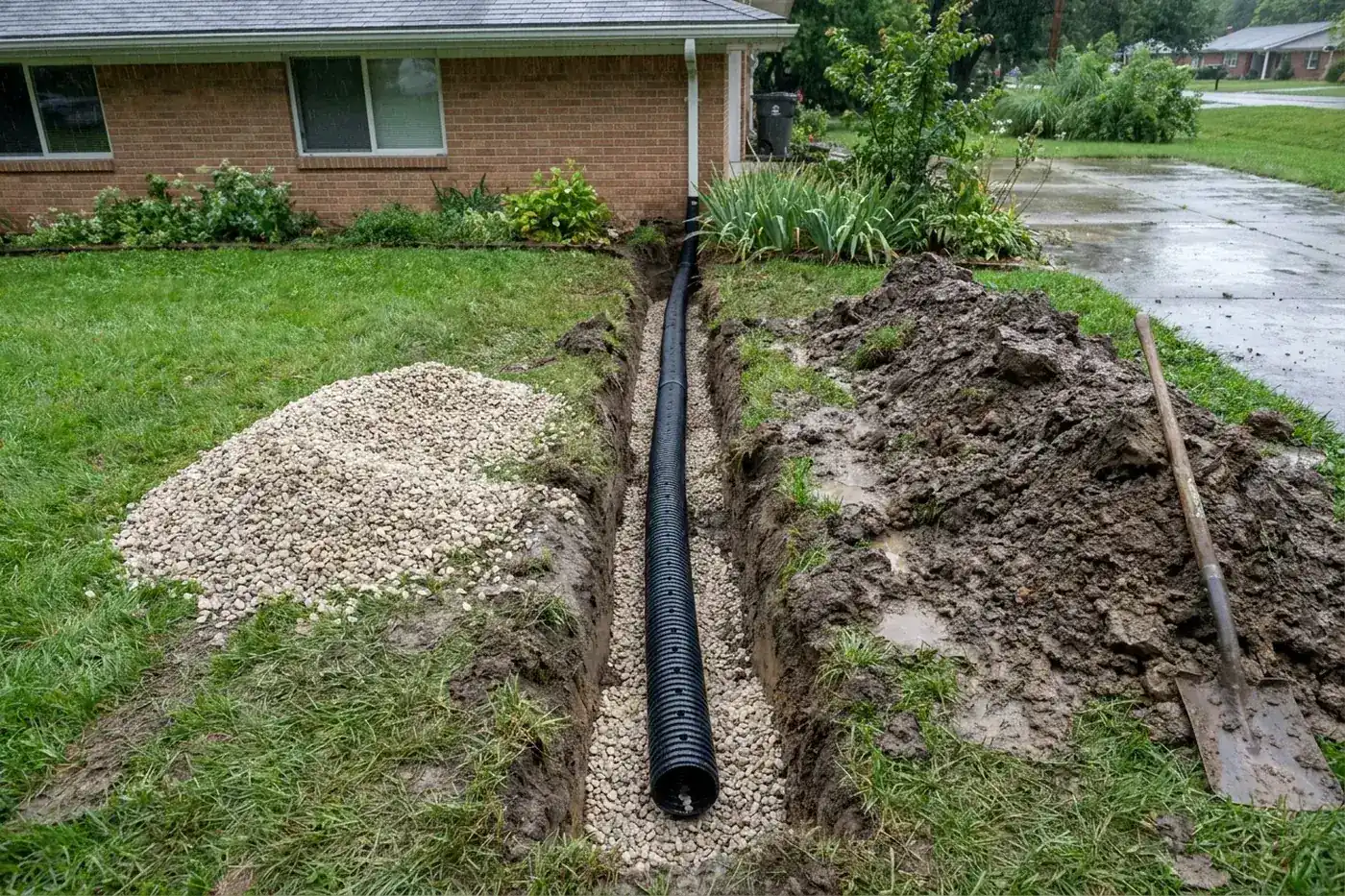
Where the issue is genuinely a high water table rather than perching, subsurface drainage has less to offer, and a good specialist will say so rather than sell it. That is a real limit and it is better stated before the trench than after.
Elevated construction changes the question
Heading toward the coast, a good deal of building sits deliberately high, and on those structures the assessment shifts from bearing soil to what the piles or piers are founded on and whether anything has scoured or softened around them.
The floor above still shows whether something has moved out of plane, so the survey is the same. What differs is where to look afterwards, and how much of the answer is about water at the surface rather than water in the soil profile.
Asked in Maurice
What does foundation repair cost in Maurice?
Complete jobs run $4,000-$15,000 in Vermilion Parish too; ask whether the first visit is charged. Where the issue turns out to be a genuinely high water table rather than perched water, the honest answer may be that drainage offers less than you hoped.
What is the difference between perched water and a high water table?
Perched water sits on a dense layer with drier ground below it. A high water table is the regional groundwater level itself. They look similar from the surface and they respond very differently to a drain.
How do I tell which one I have?
By augering below the layer the water appears to be sitting on. If the ground beneath is dry, it is perched and drainage has something to work with. If it is wet all the way down, the water table is up, and the specialist should say so.
When drainage is not the answer
If the ground is wet all the way down rather than perched on a layer, a drain has much less to work with. That is a real limit and you should hear it before the trench, not after.
Book a Lafayette site visit
The single most useful thing you can tell us is what your yard does after heavy rain — whether water stands, for how long, and in which corner. On this ground that observation narrows the diagnosis further than any description of a crack. Say whether the house is raised or on a slab too. A local specialist serving Lafayette calls you back.