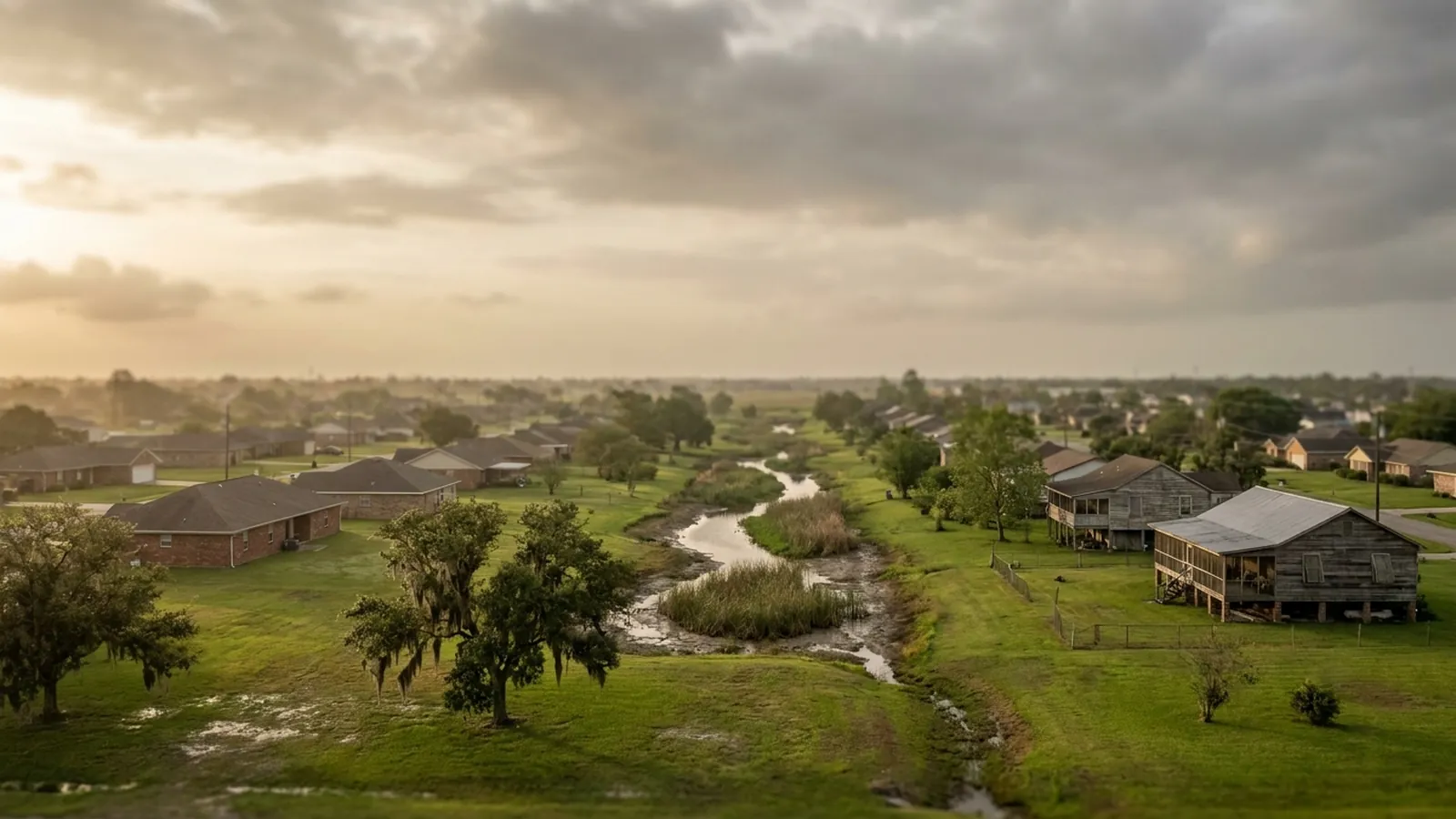
Foundation repair in Youngsville runs $4,000–$15,000, piers $1,200–$3,000 each. Almost all slab construction on former rice ground — new houses, same fourteen-inch layer.
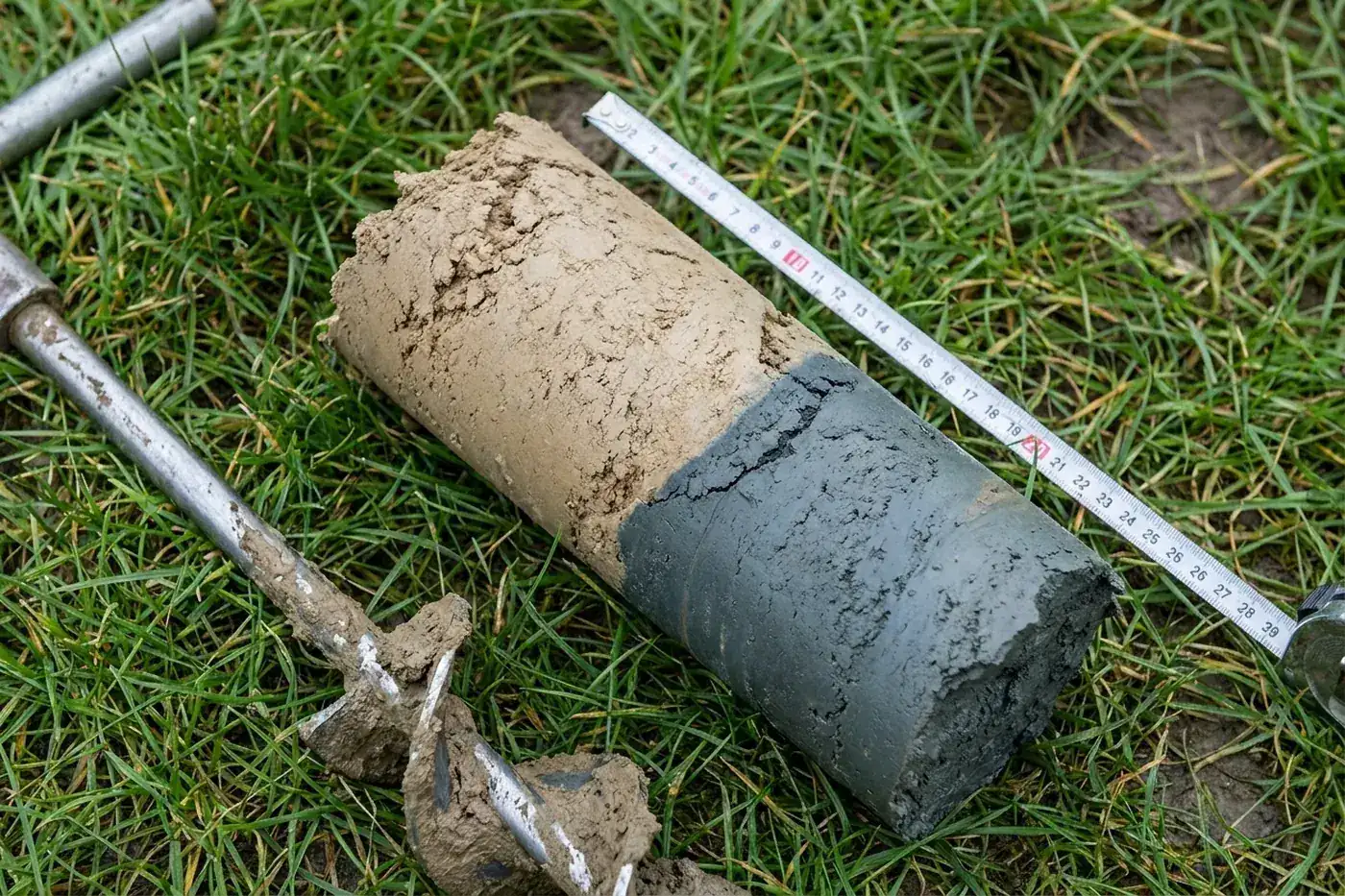
New houses on old rice ground
Most of Youngsville's housing stock is recent, built on land that was agricultural until fairly lately. That means slab construction almost throughout, and it means pads built up on ground whose defining feature is that water does not move through it.
A raised pad sheds water to its edges. Where the surrounding ground cannot absorb what arrives, that water collects around the perimeter of the property rather than soaking away.
Newer does not mean exempt
A house built in 2015 sits on the same soil profile as one built in 1955. What differs is that newer construction is almost always slab, so when the bearing soil softens the whole element tilts rather than individual supports settling. Different symptom, same cause.
What to ask if the house is still under warranty
A meaningful share of Youngsville stock is recent enough that a builder warranty may still apply, and that is worth establishing before spending your own money. Warranty terms vary and so do notice requirements.
We are not lawyers and this is not legal advice, but an independent set of floor levels is a useful document in that conversation regardless of how it goes. Either way, ask to keep the levels and take them to the builder.
Asked in Youngsville
What does foundation repair cost in Youngsville?
Complete jobs run $4,000-$15,000 with piers at $1,200-$3,000 each. Almost everything here is slab construction, so underpinning rather than releveling is the relevant repair when support work is needed.
The house is only ten years old. Surely not?
Age is not much protection on this soil. A 2015 house sits on the same profile as a 1955 one - water still perches at about fourteen inches. What differs is that newer construction is slab, so it tilts as a unit rather than settling in spots.
Does a raised pad help?
It sheds water to the edges of the pad, which helps the house and concentrates water around the perimeter. Where the surrounding ground cannot absorb it, that water has to be given somewhere to go.
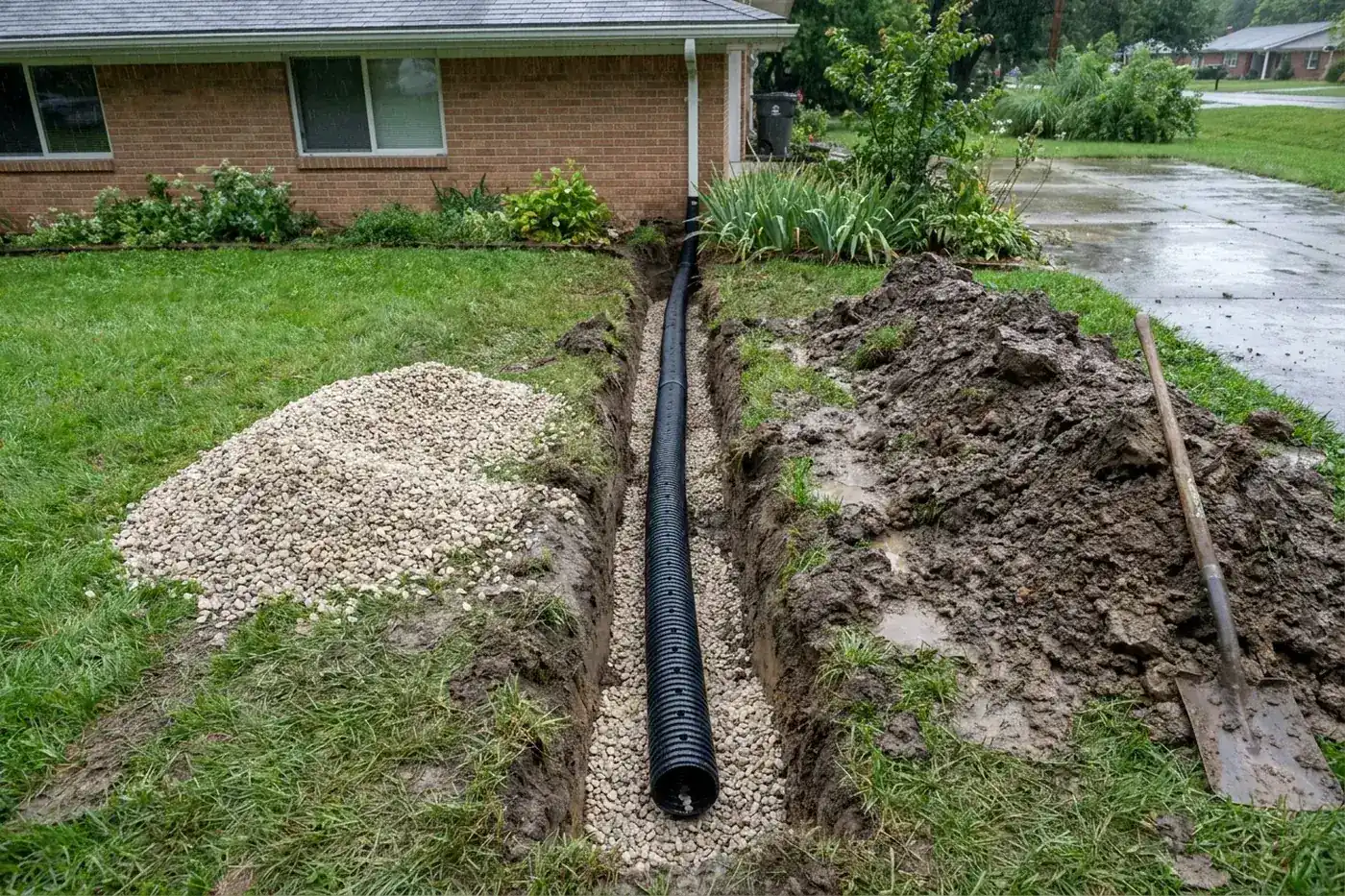
A new house on old rice ground
The build date tells you about the construction, not about the soil. Slab rather than raised, so support work means piers — but the water underneath is doing exactly what it did before the subdivision arrived.
Book a Lafayette site visit
The single most useful thing you can tell us is what your yard does after heavy rain — whether water stands, for how long, and in which corner. On this ground that observation narrows the diagnosis further than any description of a crack. Say whether the house is raised or on a slab too. A local specialist serving Lafayette calls you back.